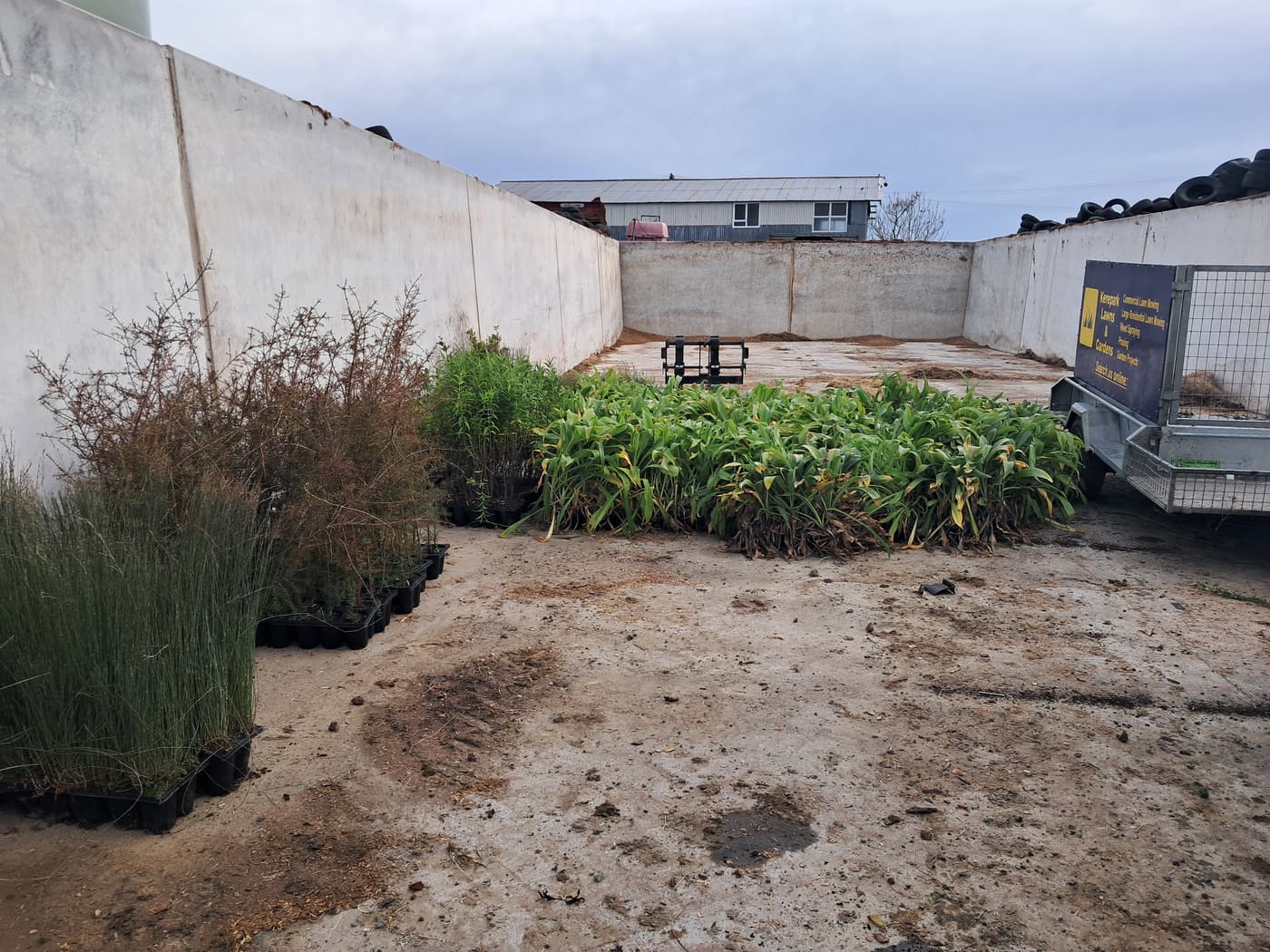
A lawn that stays soft underfoot for days after rain, water pooling beside a patio, or plants declining in an otherwise well-kept bed are not just seasonal frustrations. They are signs that water is not moving through the property as it should. Knowing how to improve drainage landscaping starts with identifying where the water comes from, where it collects, and where it can safely go.
For Waikato properties, this work deserves careful planning. Heavy rain, clay-based soils, established trees, rural driveways and large lawn areas can all affect drainage. The right solution protects the usability of the grounds, the health of planting, and the long-term condition of paths, retaining, lawns and buildings.
Start with the water, not the drain
It is tempting to install a channel drain or add gravel to the wettest patch and hope for the best. That can treat the symptom while leaving the cause untouched. Effective drainage landscaping begins with an on-site assessment during, or shortly after, wet weather where possible.
Look for the pattern of water across the entire property. Does runoff leave a roof and discharge beside the house? Is a driveway sending water into a garden bed? Has a new patio interrupted a natural fall in the land? Does water rise from saturated soil rather than flow across the surface? These are different problems and require different responses.
The first priority is always to keep water away from buildings. Ground levels should fall away from the house, sheds and other structures. Drainage must also have a suitable legal outlet, whether that is an approved stormwater connection, a designed soakage area or another site-appropriate solution. Sending water towards a neighbour's property, a boundary or a road is not a responsible fix.
On rural and lifestyle properties, it is also worth considering the broader catchment. A shallow swale that works well in a residential garden may be overwhelmed where paddocks, long driveways or slopes direct significant runoff towards the home area. Good drainage design accounts for the volume of water, not only the visible puddle.
Improve levels before adding drainage hardware
Grading is often the most valuable part of drainage landscaping. A subtle adjustment to levels can guide surface water away from hard surfaces and low-lying garden areas without making a landscape look engineered or artificial.
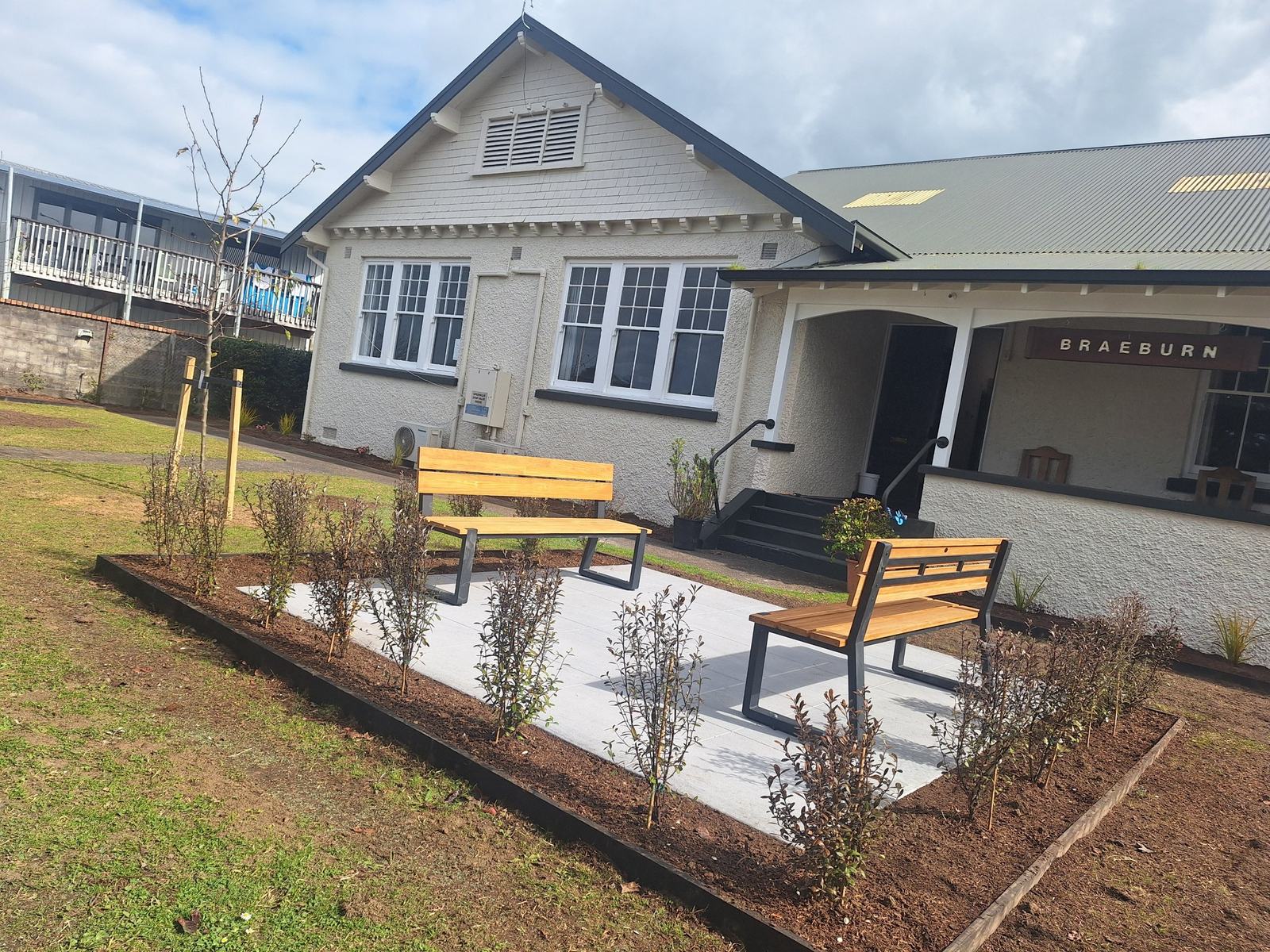
For lawns, this may involve importing and reshaping topsoil to remove hollows, then re-establishing turf. In planting areas, gentle contours can direct excess water towards a swale, collection point or more moisture-tolerant zone. Around patios and paths, finished levels need to be set precisely so water moves away from the surface and does not undermine its base.
This is where a design-and-build approach matters. Raising a lawn without checking fence lines, garden edging, existing paths and drainage outlets can create another problem elsewhere. Likewise, correcting a low spot beside a house may affect access, planting depth or the relationship between paving and doors. The best work considers the whole site before soil is moved.
Use swales where they suit the property
A swale is a broad, shallow, planted or grassed channel that slows and guides surface water. It can be an understated solution for larger lawns, lifestyle blocks and commercial grounds where there is room to work with the natural shape of the land.
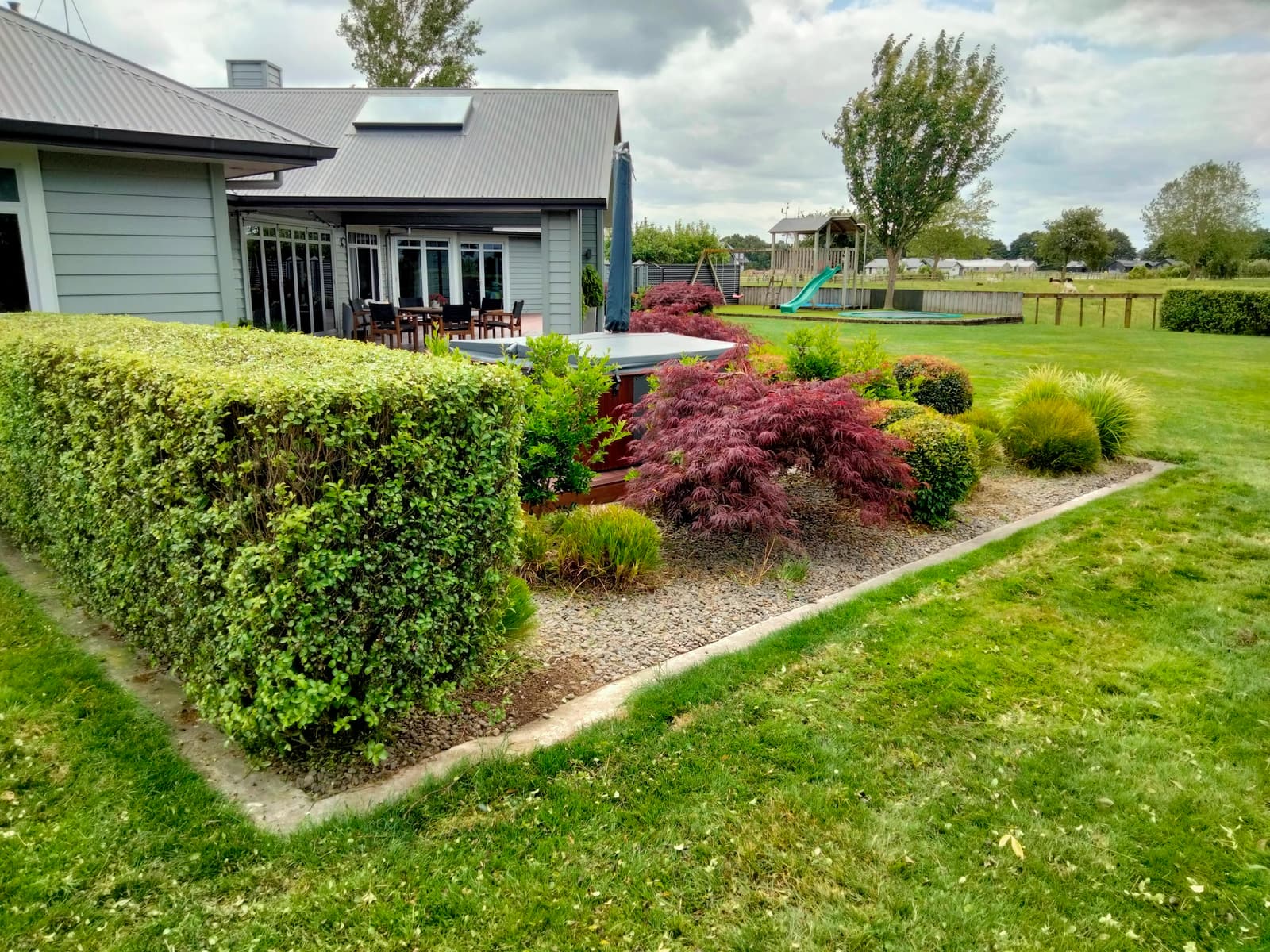
Unlike a conventional drain, a swale is visible and needs to be designed as part of the landscape. Its side slopes should be gentle enough to mow or maintain, and its planting must tolerate periods of moisture. When it is correctly positioned, a swale can reduce erosion, prevent water from crossing high-use areas and make better use of natural runoff.
Swales are not suitable everywhere. A confined urban site, an area beside a building, or ground with very slow-draining clay may require a piped system, a channel drain or engineered soakage instead.
Match the drainage solution to the problem
Once grades and water flow are understood, the right combination of landscape drainage features can be selected. Several systems may be needed on a complex property.
A French drain is useful for intercepting groundwater or water moving through soil. It generally consists of a perforated pipe set in clean drainage metal and wrapped in filter fabric to reduce sediment entering the system. It is not a cure for surface runoff unless the surface water can first reach the drain.
Channel drains are often appropriate beside patios, driveways, entrances and other hard surfaces. They collect water at the point where it runs off paving, then direct it to a suitable outlet. Their effectiveness depends on accurate falls, a solid installation base and regular clearing of leaves, silt and debris.
For wet lawn areas, a combination of reshaping and subsurface drainage may be required. The pipework has to be laid at the correct depth and gradient, with an outlet that remains functional during prolonged rain. A drain with nowhere to discharge is simply an expensive trench.
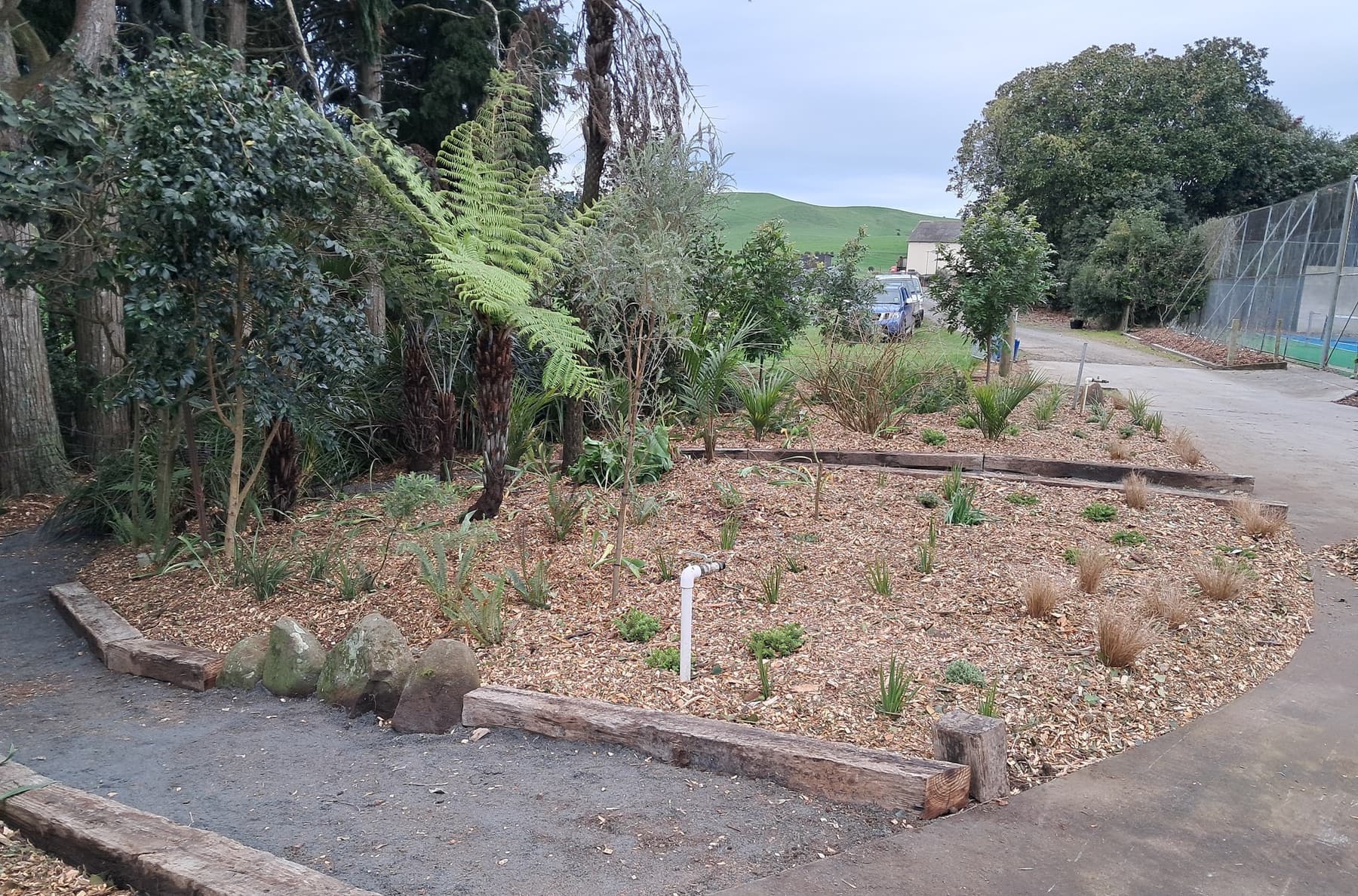
In some situations, a rain garden or planted detention area can help slow and filter runoff. These areas are designed to temporarily hold water, rather than remain permanently wet. They need the right soil profile, overflow provision and plant selection. They are particularly useful where runoff from roofs or paving can be directed into a carefully planned landscape feature.
Choose plants that work with moisture levels
Planting will not solve a serious drainage failure, but it plays an important supporting role. The wrong plant in persistently wet ground will struggle, regardless of how carefully it is maintained. Replacing it repeatedly adds cost and rarely improves the garden.
Divide the garden into moisture zones. The lowest or slowest-draining areas need species that can cope with wet feet at times. Higher ground can carry plants that prefer free-draining soil. This approach produces a healthier garden and makes seasonal conditions less demanding to manage.
Soil preparation should support the chosen planting, not work against it. Adding organic matter can improve soil structure, but it is not a substitute for drainage where water is trapped. In heavy clay, excessive fine compost or topsoil can create a soft, waterlogged layer if there is no fall or drainage pathway beneath it. Raised beds may help sensitive plants, provided they do not block natural surface flow or direct water against a structure.
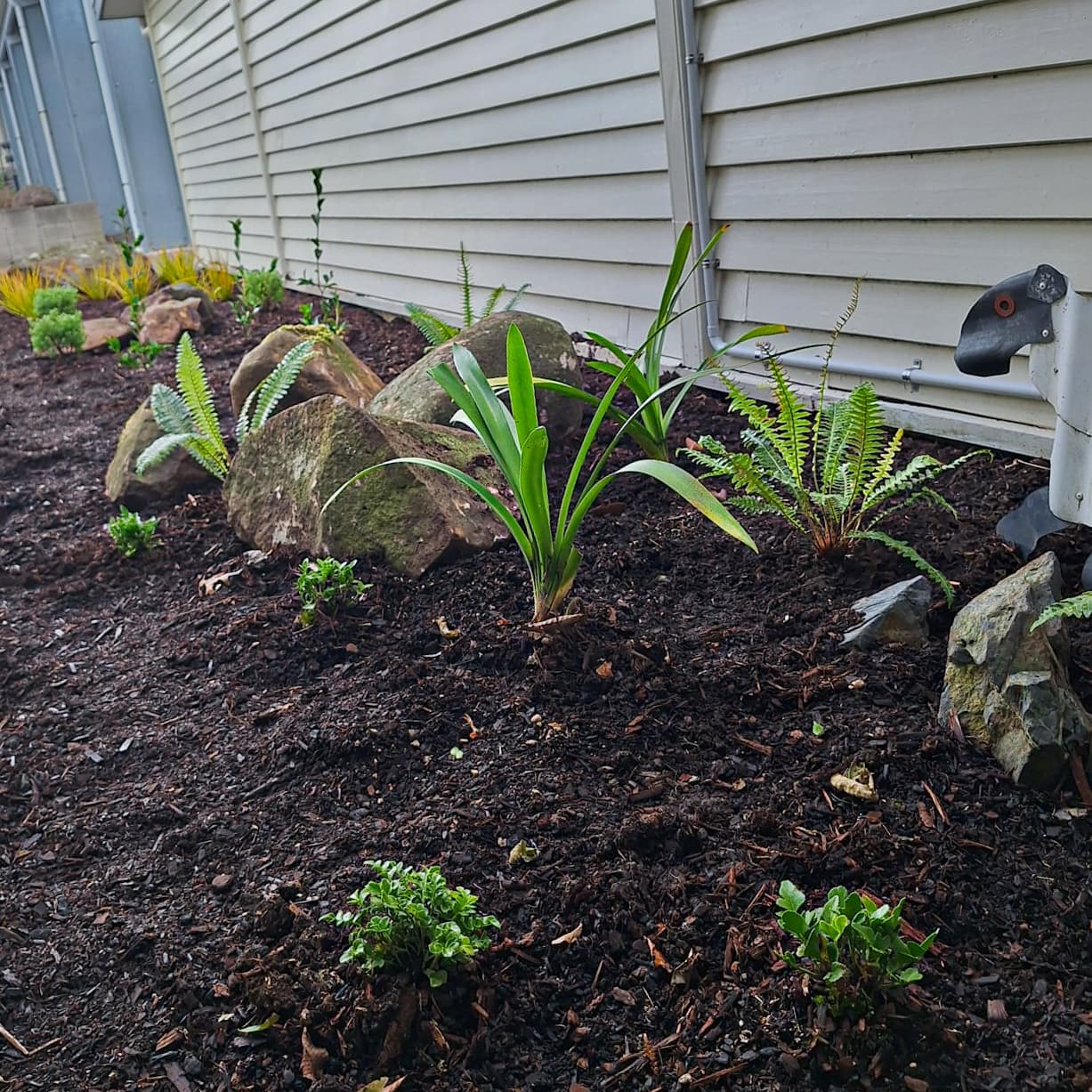
Mulch is valuable for protecting soil and reducing weed growth, but keep it clear of building cladding and avoid using it to disguise standing water. A consistently soggy mulch layer can encourage plant stress and make maintenance more difficult.
Protect driveways, paths and built features
Drainage is a construction issue as much as a gardening issue. Water entering beneath a driveway, retaining wall, paved area or garden edging can shift materials, wash out the base and shorten the life of the work.
Driveways need carefully formed crossfalls and side drainage so water does not travel down wheel tracks or pool at gateways. On rural properties, runoff control may also reduce the movement of gravel and sediment during heavy rain. Behind retaining walls, drainage metal, filter fabric and relief drainage are generally essential. A wall can look excellent when completed but fail prematurely if water pressure builds behind it.
When new landscaping is planned, drainage should be resolved before lawns are laid and planting is installed. Retrofitting drains through established gardens and finished paving is possible, but it is more disruptive and often more costly. Coordinating earthworks, construction, drainage and planting from the outset produces a neater result and avoids duplicated work.
Maintain the system after installation
Even a well-designed drainage system needs attention. Leaves can block grates, garden soil can settle into channels, roots can affect pipework, and changes around the property can alter where water travels. A new shed, garden border, vehicle track or paved area may change the drainage behaviour of the site.
Check grates, channels and visible outlets before the wetter months and after major storms. Keep surface drains free of leaf litter and lawn clippings. Watch for recurring boggy spots, erosion, sinking ground or water appearing where it did not previously collect. These signs are worth addressing early, before they affect access, lawns or structures.
For larger grounds, drainage checks can be incorporated into regular garden and property maintenance. This is especially useful for commercial sites, lifestyle properties and homes with mature gardens, where small issues are easier to manage as part of ongoing care than as emergency repairs.
When professional drainage landscaping is worthwhile
Simple surface adjustments may be manageable on a small, open lawn. Professional input is worthwhile when water is affecting a building, retaining wall, driveway or neighbouring property; when there are persistent wet areas; or when the ground needs significant reshaping. It is also sensible where stormwater requirements, services, septic systems, tree roots or complex levels are involved.
Kerepark Lawns & Gardens can assess drainage as part of a coordinated landscape plan, then carry the work through from earthworks and construction to planting and ongoing maintenance. That continuity helps ensure the finished garden is not only attractive on handover day, but practical through Waikato winters as well.
The most successful drainage landscapes do not announce themselves with obvious pipes and trenches. After rain, the lawn remains usable, paths stay safe, planting looks healthy and water moves quietly to where it belongs.