A well-watered garden should not depend on someone dragging a hose across the lawn every second evening. For Waikato properties with established gardens, hedges, lawns, orchards or large lifestyle blocks, a considered garden irrigation planning guide is the starting point for healthier plants, more efficient water use and grounds that continue to look cared for through dry periods.
The best irrigation systems are rarely the most visible. They work quietly in the background, delivering the right amount of water to the right area, at the right time. Achieving that result requires more than selecting sprinklers or laying dripline. It calls for a plan shaped around your site, your planting, your water supply and the level of ongoing care you expect from the property.
Start with the property, not the irrigation products
Every garden has different watering demands. A sunny front lawn, a sheltered courtyard, a newly planted boundary hedge and a productive orchard may sit within metres of each other, yet they should not be watered in the same way or on the same schedule.
The first task is to divide the grounds into practical irrigation zones. A zone groups plants or lawn areas with similar water needs, exposure and soil conditions. This gives each part of the property a suitable watering programme rather than applying a one-size-fits-all schedule.
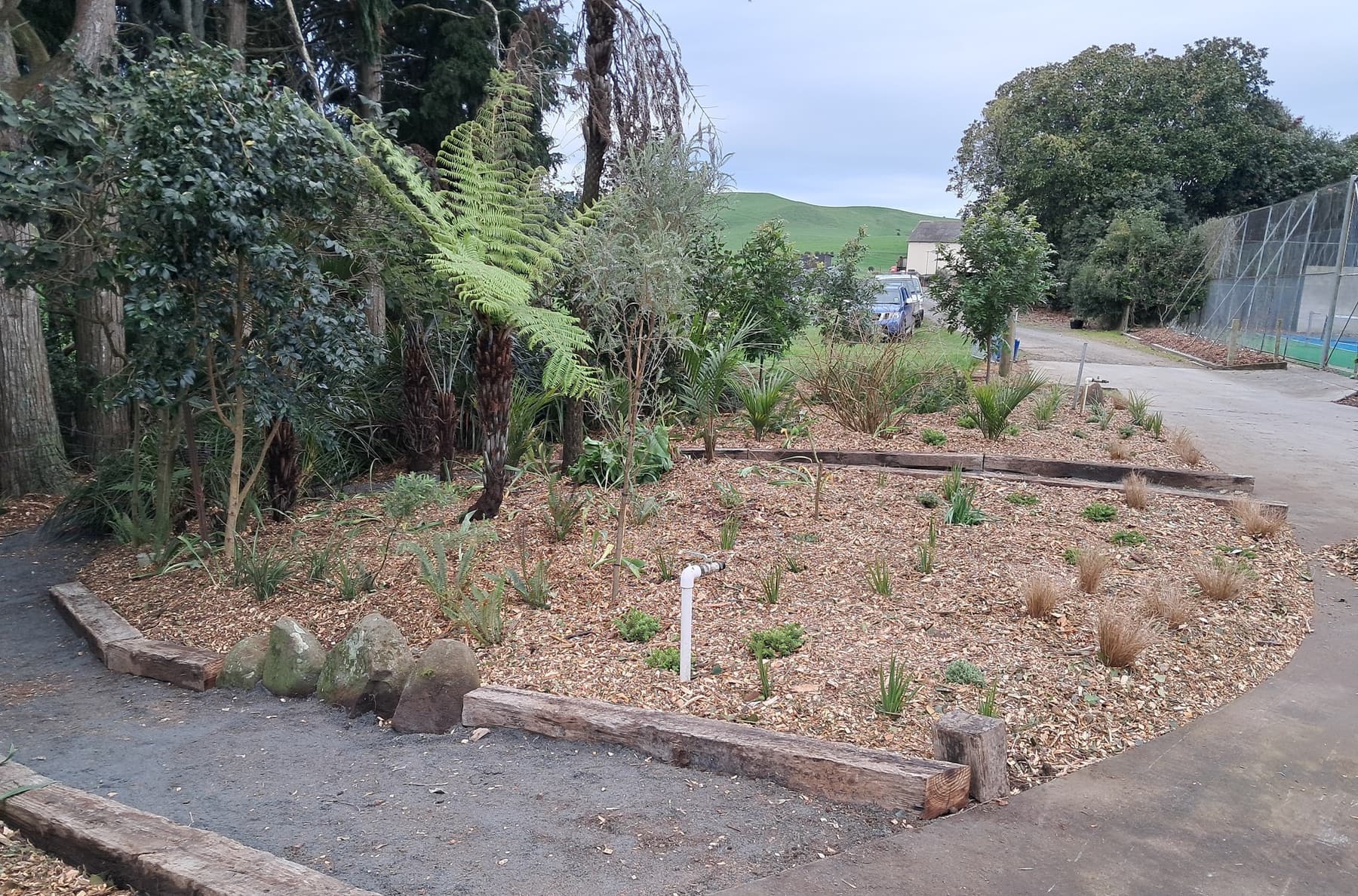
On a typical Waikato property, separate zones may be needed for lawns, ornamental beds, vegetable gardens, hedging, trees and orchard areas. Newly planted gardens also deserve their own zone where possible. Their roots are still establishing, and they need more consistent attention than mature planting. Grouping them with established trees can lead to either stressed new plants or unnecessary water use around mature ones.
Sun and wind exposure matter just as much as planting type. Open sites in Matamata, Te Aroha or rural Piako can dry quickly under summer wind, while a shaded bed near the house may hold moisture for considerably longer. Observe where water naturally sits after rain, where soil dries first and where slopes cause run-off. This information has more long-term value than choosing a system based on appearance alone.
Garden irrigation planning guide: assess water and soil
Before designing pipe runs or choosing emitters, establish what water is available and how reliably it can be supplied. Town supply, rainwater storage, bore water and pumped water each create different design considerations.
Water pressure and flow rate determine how many sprinklers or dripline runs can operate at once. A system that exceeds the available flow may appear to work, but sprinklers will throw unevenly and the furthest areas may receive too little water. On larger grounds, this is usually solved with multiple zones operating in sequence rather than attempting to water everything at once.
Rainwater tanks require particular care. Tank size, roof catchment, household demand and the likely length of dry weather all affect how much water can be allocated to gardens. Irrigation should support the landscape without compromising essential household supply. In some cases, drought-tolerant plant choices, mulching and targeted drip irrigation provide better value than expanding lawn sprinkler coverage.
Soil type changes the way water should be applied. Heavy clay soils common in parts of the Waikato can absorb water slowly. Long watering cycles may create puddling and run-off before moisture reaches the root zone. Shorter cycles with a pause between them often allow better infiltration. Freer-draining soils may need slower, more frequent watering, particularly around young planting.
A simple soil check is useful: dig into the root zone several hours after irrigation. If the surface is wet but the soil below is dry, the system is not running long enough. If the ground is soggy well below the roots, it may be running too long or too often. Healthy irrigation is about moisture where roots can use it, not just a green surface.
Choose the delivery method for each area
Different irrigation methods suit different garden spaces. Dripline and individual drippers are generally the most efficient option for garden beds, hedges, fruit trees and vegetable plots. They place water at soil level, reducing evaporation and keeping foliage drier. This can also help limit fungal issues in dense planting.
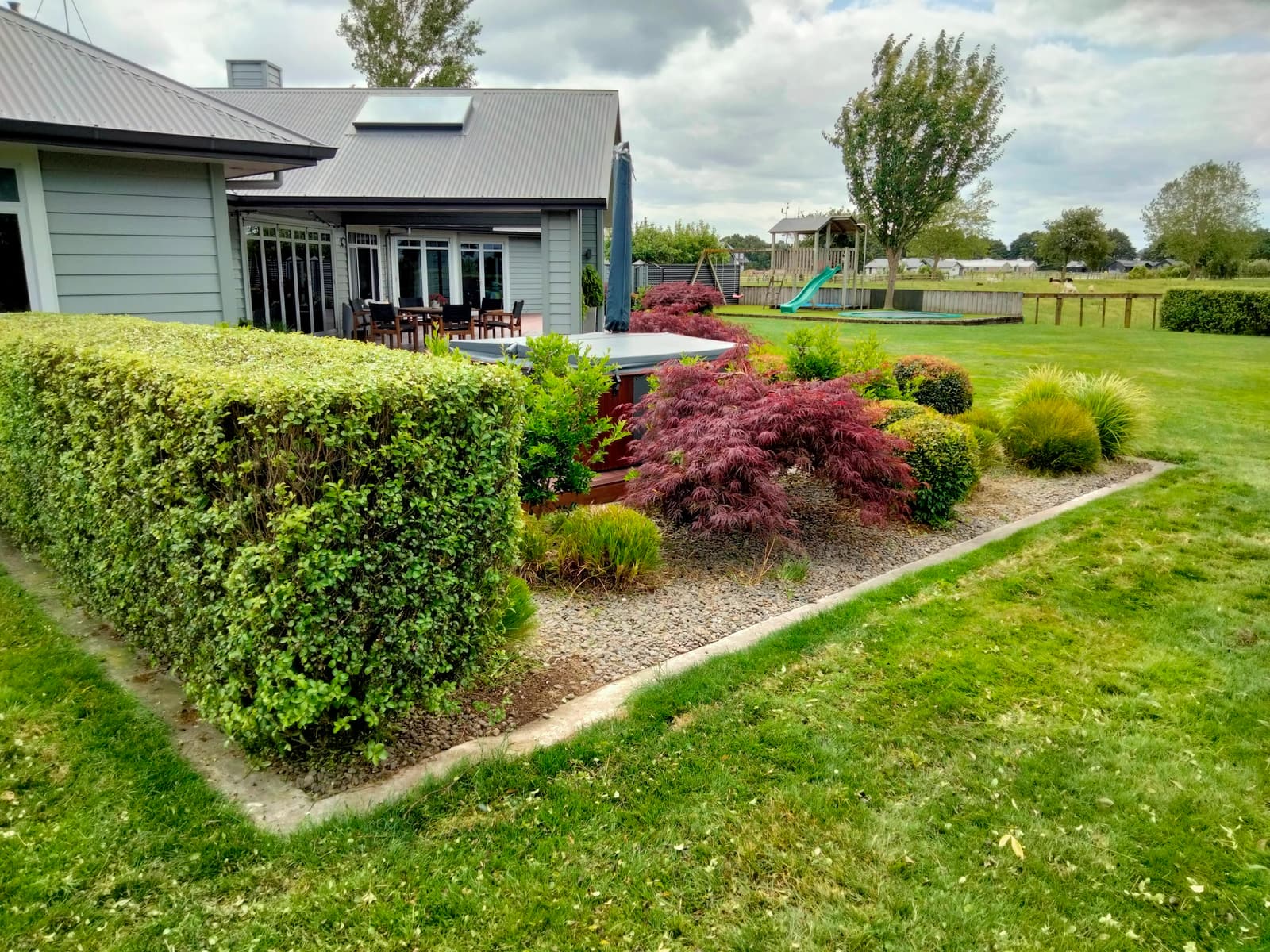
Pop-up sprinklers are often the right choice for lawns because they provide even coverage across turf. They should be positioned and adjusted carefully so water reaches the lawn without regularly soaking paths, fences, walls or driveways. Overspray wastes water and can leave hard surfaces slippery or stained over time.
Micro-sprays can be useful in broader planted areas, especially while new planting is establishing. However, they are more exposed to wind and evaporation than drip systems. They also need monitoring, as mulch can shift, plants grow over spray heads and fine nozzles can block.
For an orchard or scattered specimen trees, a targeted dripper ring or low-volume bubbler can be more appropriate than irrigating the entire grassed area. Mature trees benefit from deep watering across their broader root zone, but they do not need daily surface watering. The right arrangement depends on tree age, soil, root spread and whether the area is also managed as lawn.
Design for access, maintenance and future growth
An irrigation system is part of the landscape infrastructure. It should be installed with the same care as drainage, edging or outdoor lighting, not treated as an afterthought that will be hidden under mulch.
Main lines and valves need sensible locations with clear access for servicing. Controllers should be protected from weather, easy to operate and programmed with enough flexibility for seasonal changes. Where possible, label zones clearly. This makes adjustments straightforward for property owners, gardeners and maintenance teams.
Plant growth also needs to be allowed for. A dripper placed beside a small shrub may be too close to the trunk after several years. Sprinkler coverage can be blocked by maturing hedges or ornamental grasses. In established gardens, regular inspections are the practical way to identify these changes before stressed plants reveal the issue.
For properties undergoing staged landscaping, install capacity for future zones while access is open. Running an additional sleeve beneath a driveway, path or retaining edge during construction is far simpler and less disruptive than excavating later. This is one reason integrated landscape design and construction delivers a better outcome: irrigation, planting, drainage and access can be coordinated from the outset.
Build watering schedules around seasons, not habits
A timer is valuable, but it should not make irrigation automatic in the wrong sense. Weather, rainfall, temperature and plant maturity should all influence programming. A schedule that works in January may be excessive in April.
During summer, lawns and garden beds are usually best watered early in the morning. Less water is lost to evaporation, foliage has time to dry and the garden is not competing with heat later in the day. Evening watering can suit some situations, but regularly wet foliage overnight can increase disease pressure in susceptible plants.
Aim for deeper, less frequent watering rather than frequent light applications. Shallow watering encourages shallow roots, leaving plants less resilient when heat or wind arrives. The exception is fresh planting, seedling beds and containers, which can dry quickly and may need closer monitoring.
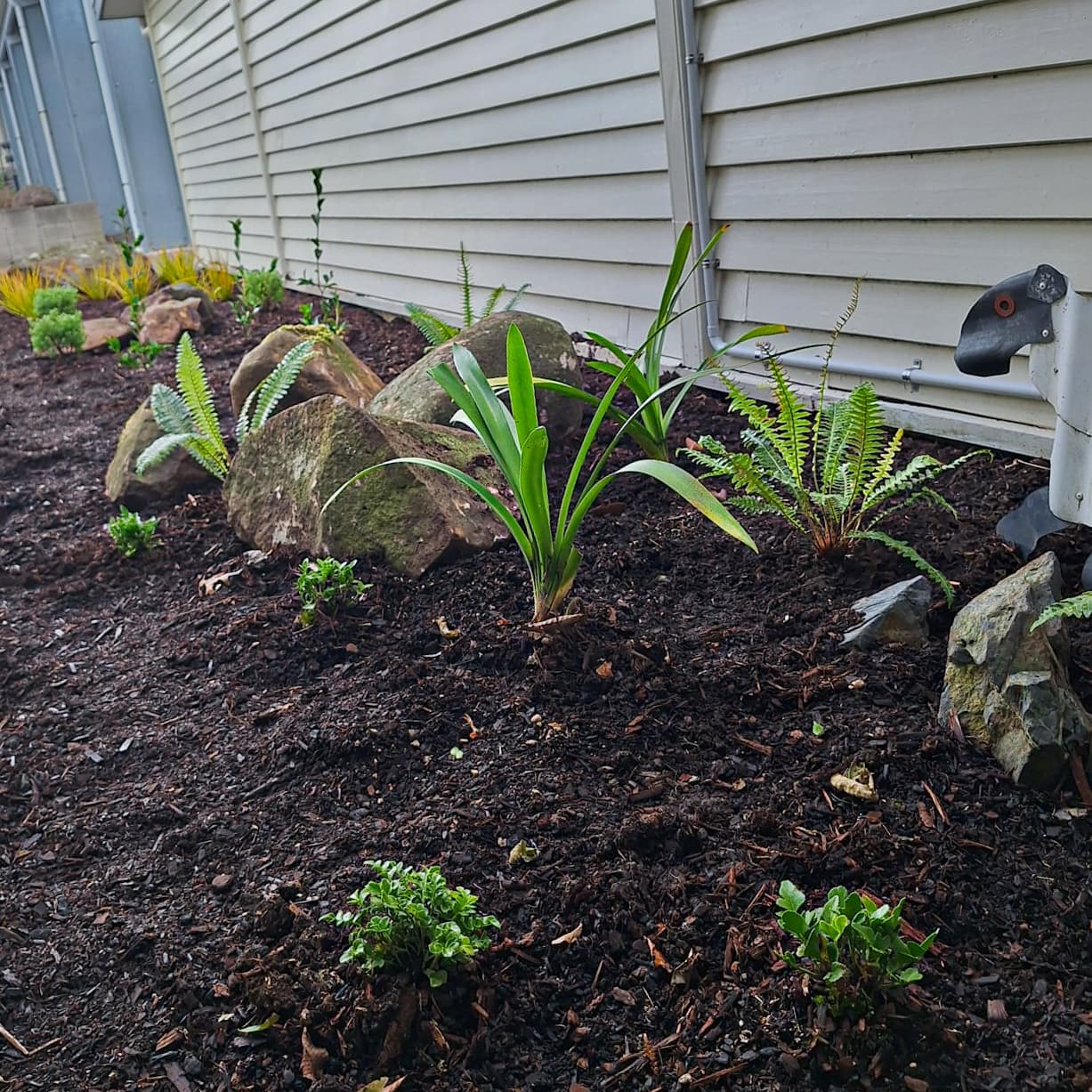
Mulch is one of irrigation's most effective partners. A well-maintained layer around planting beds reduces evaporation, moderates soil temperature and helps water reach the soil rather than crusting on the surface. Keep mulch clear of trunks and stems to avoid creating damp conditions at the base of plants.
Protect the investment with regular checks
Even a well-designed system needs attention. Filters need cleaning, drippers can block, sprinkler heads can be damaged by mowers, and roots or soil movement can affect pipework. A quick seasonal inspection can prevent a small fault from becoming a patchy lawn, declining hedge or wasted water bill.
Look for dry circles around sprinklers, unusually wet patches, water running onto paths, drooping plants within an otherwise healthy bed and irrigation that continues after the controller should have shut off. These are signs that adjustment or repair is required.
For larger residential grounds, commercial sites and lifestyle properties, irrigation maintenance is best treated as part of the wider garden-care programme. When mowing, pruning, mulching, planting and irrigation checks are coordinated, issues are seen earlier and every part of the landscape is managed with the same long-term standard.
A good irrigation plan should make your outdoor spaces easier to enjoy, not add another demanding job to the weekly list. Kerepark Lawns & Gardens can help property owners across the Waikato plan irrigation that supports the way their gardens are designed, built and maintained for years to come.