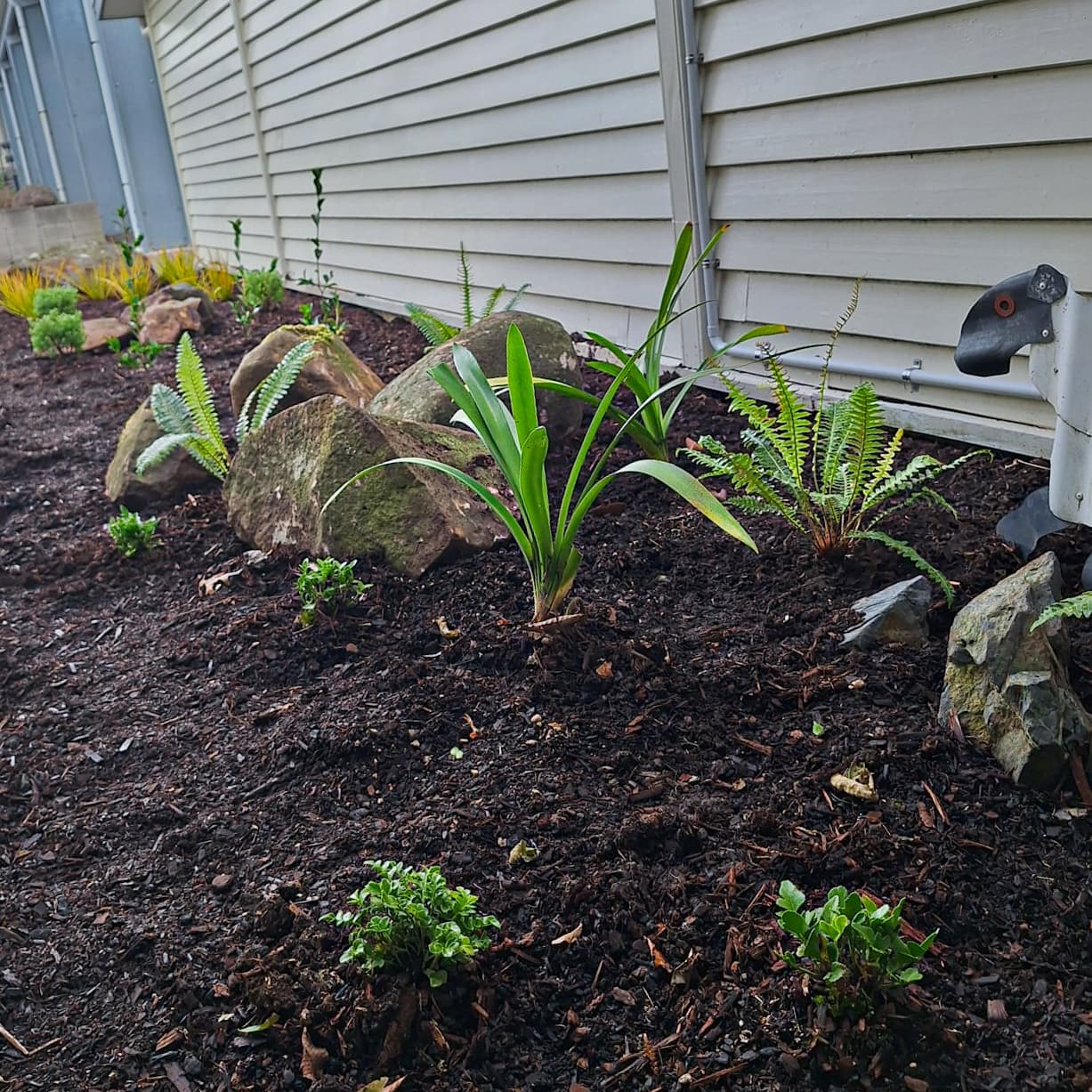
A lawn that remains soft underfoot days after rain is more than an inconvenience. Standing water can weaken turf, rot plant roots, stain paving and, if left unresolved, place moisture where it does not belong around buildings. Well-planned garden drainage solutions manage water at its source, protect the investment in your grounds and make outdoor areas more usable through Waikato’s wet seasons.
The right answer is rarely a single drain installed in the lowest corner of the section. Water follows the contours of the land, moves differently through clay, silt or free-draining soil, and is affected by roofs, driveways, paths and neighbouring levels. A lasting result begins with understanding why the water is collecting.
Why poor drainage needs attention
Some drainage problems are obvious after a heavy downpour. Others build slowly: lawn thins in the same patch each winter, garden beds struggle despite careful planting, or a path becomes slippery with algae. Excess water displaces the air that roots need, so even hardy plants can decline in permanently wet soil. Repeated traffic over saturated lawn also compacts the ground, making the problem worse.
On lifestyle and rural properties, runoff from larger roofs, accessways and paddocks can add significant volume to a garden area. On residential and commercial sites, hard surfaces often send water quickly towards low points. Downpipes that discharge too close to a house, a shed or a paved courtyard are a common issue. The aim is not to remove every drop of water from the property. Healthy soil needs moisture. The aim is to move excess water safely, predictably and without creating a new problem elsewhere.
Start with a proper site assessment
Before selecting a drain type, observe the property during or shortly after rain. Note where water enters the site, where it ponds, and how long it remains. Look at roof runoff, the fall of paths and driveways, low garden beds, retaining walls and the condition of existing stormwater outlets.
Identify the source, not just the puddle
The visible puddle is often the final stopping point, rather than the cause. Water may be flowing from an uphill lawn, spilling from an undersized downpipe outlet or being held back by a compacted layer beneath the topsoil. A retaining wall without suitable drainage can also trap water behind it and direct pressure towards a lower garden or paved area.
Soil testing is equally useful. Waikato soils vary considerably, and heavy clay can drain slowly even on a site that appears to slope well. Digging a small test hole and seeing how quickly water drains can indicate whether the issue is surface runoff, poor subsoil drainage or both. This assessment helps avoid spending money on a drain that cannot handle the water volume or has nowhere effective to discharge.
Check the legal and practical outlet
Every drainage system needs an approved place for water to go. Depending on the property, that may be a council stormwater connection, a suitable swale, a rain garden, a soak pit designed for the soil conditions, or a carefully graded area away from buildings. Water must not simply be redirected onto a neighbour’s land or discharged where it will undermine a boundary, driveway or retaining structure.
For larger works, it is sensible to confirm local requirements before construction. The best drainage design considers the whole property and its downstream effects, not only the wet patch nearest the house.
Garden drainage solutions for different problems
The most effective systems often combine surface shaping with below-ground drainage. Choosing between them depends on the amount of water, the site levels, soil type and how the area is used.
Regrading and surface swales
Where water is sitting because the ground has settled or was originally built flat, reshaping may be the simplest solution. Gentle falls can guide surface water away from buildings and across lawns without making the landscape look engineered. A shallow grassed swale can carry runoff through a larger section while remaining easy to mow and visually unobtrusive.
This approach works well when there is room to create fall and a safe lower outlet. It is less suitable where levels are constrained by existing paving, boundaries or buildings. Good grading must be subtle enough to suit the garden while still having enough fall for water to move.
Agricultural drains and collector drains
A perforated pipe set in clean drainage metal, commonly known as an agricultural drain, collects water moving through saturated soil. It is particularly useful beside retaining walls, along the uphill edge of lawns, through persistently wet planting zones or at the base of a slope. Filter fabric may be used where appropriate to help limit soil migration into the aggregate.
The detail matters. Pipe depth, gradient, aggregate size, access for cleaning and the final outlet all affect performance. An agricultural drain installed without adequate fall can hold water rather than remove it. It also does not replace surface drainage when a large volume of water is flowing across the ground after heavy rain.
Channel drains for paving and driveways
Where runoff travels across concrete, pavers or asphalt, a linear channel drain can intercept it before it reaches a garage, doorway or courtyard. These drains are practical around driveways, commercial entrances and hard-landscaped entertaining areas, where even a small amount of standing water creates a slip hazard or damages the edge of a surface.
Grates should suit the expected traffic and be installed level with the finished surface. They also need occasional clearing, particularly beneath trees or hedges where leaves and debris can collect. A channel drain is highly effective at a defined crossing point, but it should connect to a properly sized outlet rather than an improvised low spot.
Soak pits, rain gardens and planted drainage areas
Where ground conditions allow, a soak pit can hold roof or surface water and release it gradually into surrounding soil. It needs to be sized for the catchment area and positioned clear of foundations, retaining walls and other structures. In slow-draining clay, a soak pit may be unsuitable on its own or require a different design.
Rain gardens and planted swales can slow, filter and use runoff while adding visual value. They are not simply holes filled with thirsty plants. Their soil profile, overflow path and planting selection need to be considered together. Done well, they soften a practical drainage feature into a healthy part of the landscape.
Drainage should work with the landscape plan
A quality drainage installation is easier to maintain when it is coordinated with paths, retaining, lawns and planting from the beginning. Drain locations can be concealed beneath lawn or integrated into garden edges. Falls can be built into a new patio before paving is laid. Downpipe connections can be planned before garden beds and feature planting make access difficult.
This is particularly valuable on properties undergoing a broader outdoor upgrade. Rather than treating drainage as an afterthought, it becomes part of the construction sequence: establish levels, manage stormwater, build structures, prepare soil, then install turf and plants. That order protects finished work and gives new planting a better start.
Kerepark Lawns & Gardens takes this whole-property view when planning and constructing outdoor spaces, with drainage considered alongside the finished appearance and the practical demands of ongoing maintenance.
Installation quality and ongoing care
Even an appropriate design can fail through poor installation. Trenches need consistent fall, pipes must be correctly joined, and drainage aggregate must remain clean during construction. Surface inlets need to sit at the right finished level. Just as importantly, spoil and machinery need to be managed carefully to avoid compacting the surrounding lawn and garden unnecessarily.
Drainage systems are not entirely maintenance-free. Clear leaves from grates and gullies before winter, keep downpipes flowing freely and watch for settlement around newly landscaped areas. If a swale or rain garden becomes overgrown, maintain the intended water path rather than filling it in during routine gardening. A professional maintenance programme can identify these changes before they turn into expensive repairs.
If water is repeatedly affecting your lawn, garden, paving or buildings, arrange an on-site assessment before the next wet season. A considered drainage plan can turn a difficult, soggy area into a landscape that looks good, performs reliably and remains easier to care for year after year.