A wet patch is not necessarily a drainage failure waiting to happen. In many Waikato properties, it is simply a distinct growing condition that needs the right response. Choosing the best plants for wet areas can turn a persistently damp lawn edge, low-lying garden bed or pond margin into a healthy, purposeful part of the landscape.
The key is to match plants to the level of moisture they will actually experience. A border that stays damp after rain needs different planting from a swale that sits wet through winter, and neither should be treated like a pond edge. Good planting begins with observing the site, rather than forcing unsuitable plants to survive in it.
Start by understanding why the area stays wet
Before planting, establish whether the soil is seasonally damp, regularly waterlogged or permanently wet. Waikato’s rainfall, heavy clay soils and flat or gently sloping sites can all slow drainage. Run-off from roofs, driveways and rural yards can add to the problem, particularly where water collects at the base of a slope.
A seasonal wet area may dry considerably in summer. These sites suit plants that appreciate moisture but can cope when conditions become less forgiving. A permanently boggy area needs true wetland plants with roots adapted to low-oxygen soil. If water remains close to a house, retaining wall, driveway or building foundation, planting should not replace proper drainage assessment. Address the cause first, then design the planting around the finished water flow.
It also pays to check light levels. Many wet-tolerant plants prefer sun, while others perform best in the cool shade beneath established trees. Soil moisture is only one part of the brief.
Best plants for wet areas with full sun
Sunny wet ground can support some of the most architectural planting in a garden. These plants are especially useful around detention basins, open drains, pond margins and broad low points in lawns, where their form gives the area a deliberate, well-managed appearance.
Harakeke and native sedges
Harakeke, or New Zealand flax, is a dependable choice for damp ground when it has room to develop. Its upright leaves hold their shape year-round, creating strong structure in large residential gardens, lifestyle blocks and commercial landscapes. Select cultivars to suit the scale of the site, as mature plants can become substantial. Remove spent flower stalks and divide congested clumps as part of scheduled maintenance.
Native sedges, including Carex secta and suitable Carex cultivars, bring movement and texture without looking overworked. Their fine foliage softens the edge between lawn, water and planting beds. They work particularly well in naturalistic groups, rather than as isolated specimens. A mass planting of sedges can also help make a shallow swale look intentional while providing useful cover for soil.
Rushes and wetland grasses
Rushes such as Juncus species are among the most reliable plants for ground that is regularly saturated. Their upright, rush-like stems cope with waterlogging and give structure through winter, when many flowering plants are dormant. They are practical rather than showy, which makes them valuable in drainage-focused areas where resilience matters most.
For larger pond edges or rural properties, toetoe can create a handsome backdrop. It needs careful placement because it grows large and should not obstruct views, accessways or sightlines near driveways. Give it adequate spacing from the start so it can develop without repeated hard pruning.
Canna lilies and moisture-loving flowers
Where a more colourful, garden-style result is wanted, canna lilies provide bold leaves and warm-season flowers. They enjoy fertile, consistently moist soil and suit sheltered sunny positions. In exposed Waikato sites, wind can damage their foliage, so place them where surrounding planting or structures offer some protection.
Daylilies and some varieties of iris also cope well with damp soil, although they are not suitable for areas that remain deeply waterlogged. Siberian iris is generally a better choice than yellow flag iris, which can be invasive around waterways. The distinction matters: a plant that performs well in a garden can become a long-term management issue if it spreads into drains, streams or wetland margins.
Planting for damp shade and sheltered borders
Wet shade is often more challenging than wet sun. Trees may create shade while their roots compete strongly for nutrients, and compacted soil can hold water after rain. The answer is not to pack the area with plants. Use a considered palette, improve the soil where practical and leave enough space for air movement and maintenance access.
Astilbe, ligularia and hostas
Astilbe brings soft plumes of flower to moist, partly shaded borders and is particularly effective in groups. It benefits from compost-rich soil and reliable moisture during dry spells. Ligularia offers larger leaves and bright daisy-like flowers, making it a strong focal point near a shaded water feature or sheltered patio garden. Both can suffer if the soil dries out completely in summer.
Hostas suit protected, damp shade, particularly close to a house or beneath light tree canopy. Their leaves provide generous texture, but slugs and snails can be an ongoing consideration. On professionally maintained properties, regular monitoring is often more effective than waiting until foliage is heavily damaged.
Ferns and native character
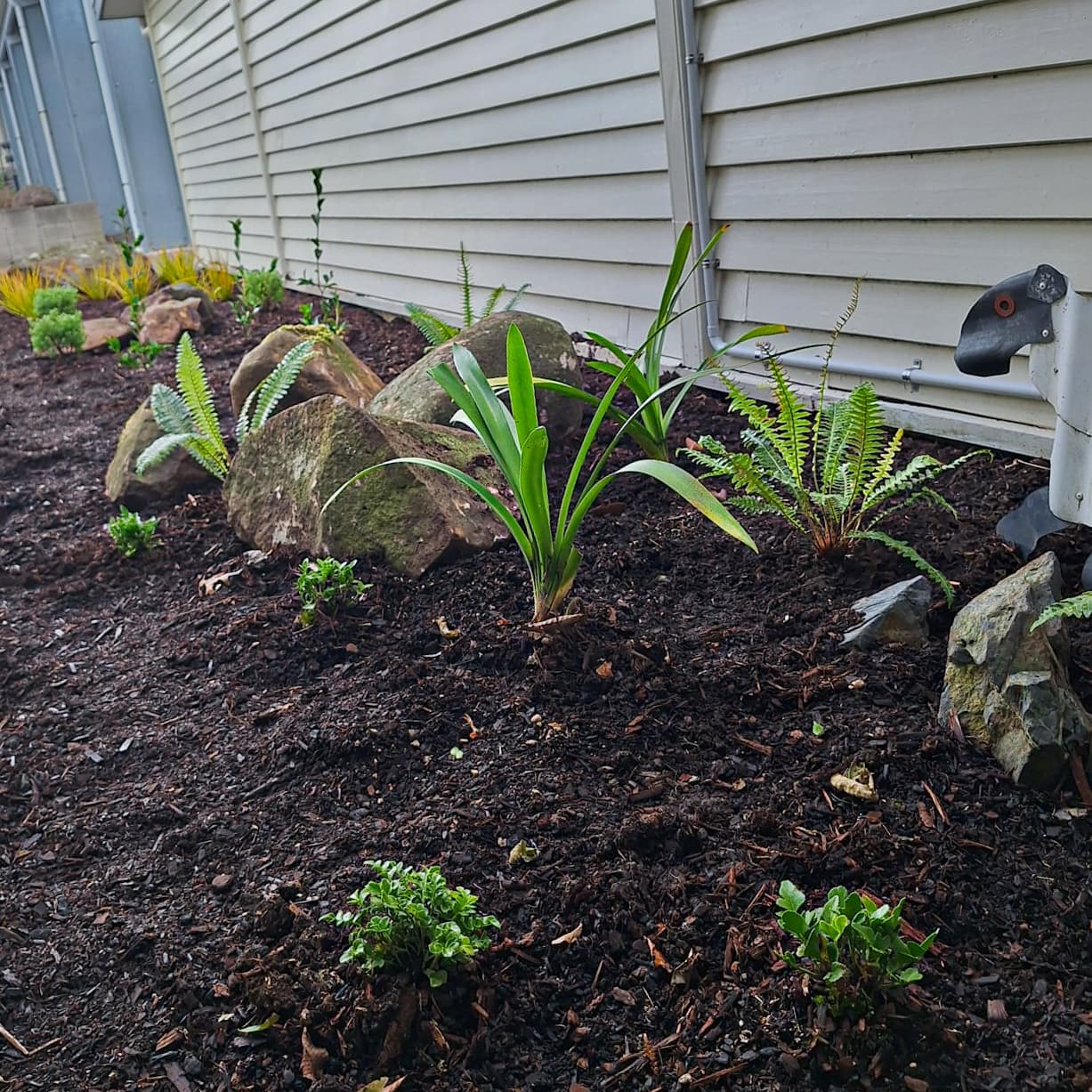
For a distinctly New Zealand feel, ferns are an excellent choice in sheltered, moist shade. Hen and chicken fern, kiokio and other appropriate local fern species can create a layered planting scheme beneath trees or along a shaded gully edge. Their success depends on shelter, humus-rich soil and protection from harsh afternoon sun.
Cabbage trees can also handle damp conditions and provide height where a border needs vertical definition. They are well suited to larger grounds, but should be positioned with their mature canopy and falling leaves in mind. Avoid planting them where they will interfere with paths, roofs or regular mowing routes.
Design wet areas as a landscape feature
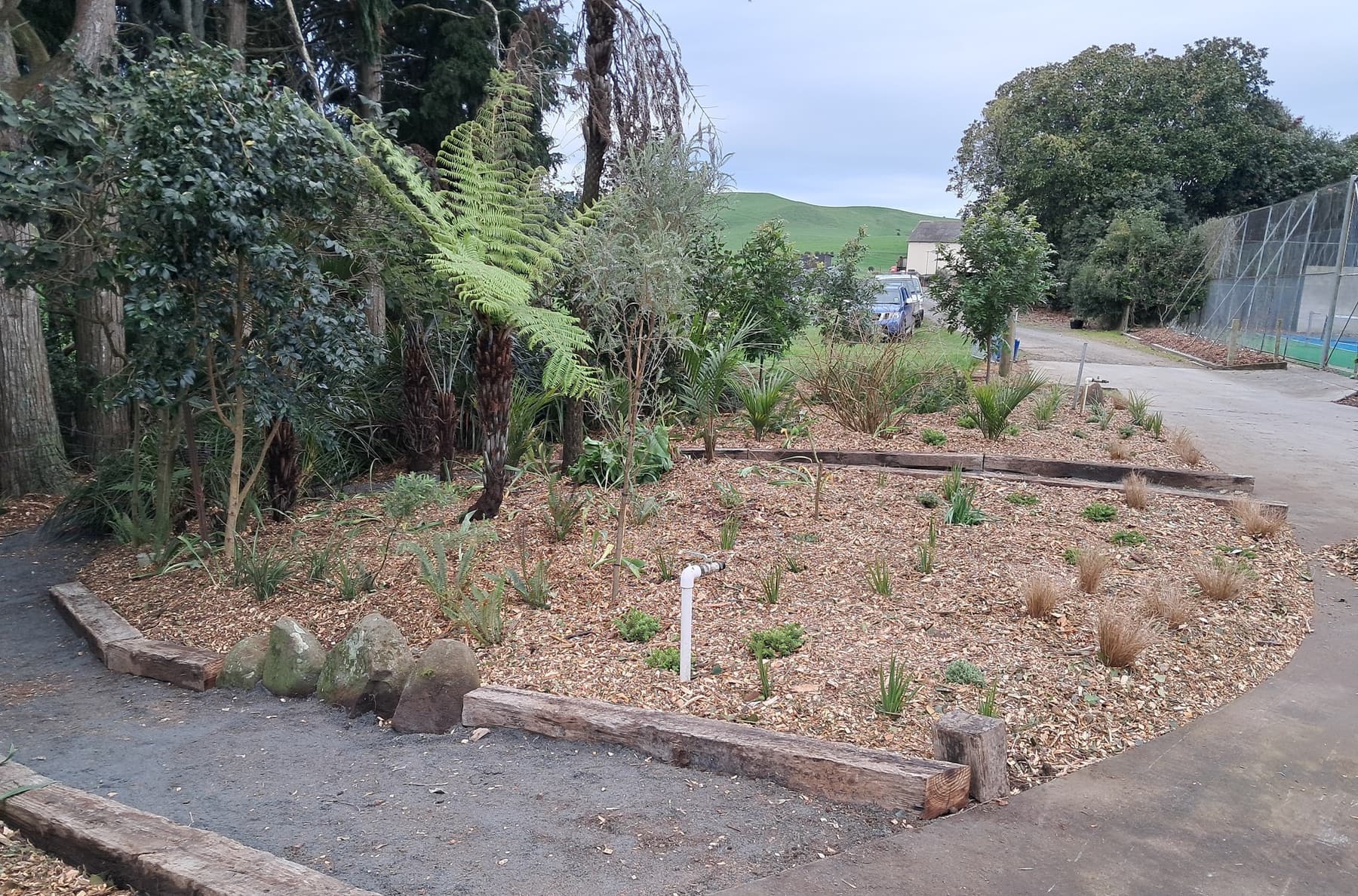
The most successful wet-area planting has clear edges and a reason for being. Rather than scattering individual plants through a soggy lawn, shape the zone into a defined bed, swale or pond margin. This reduces mowing difficulty and helps the garden read as designed, not neglected.
Use taller plants such as flax, toetoe or rushes towards the back or centre of a broad bed. Step down to sedges, iris and lower groundcover around the edges. Repeating a limited range of plants usually delivers a stronger result than using one of everything. It also makes future maintenance simpler, particularly across extensive residential or commercial grounds.
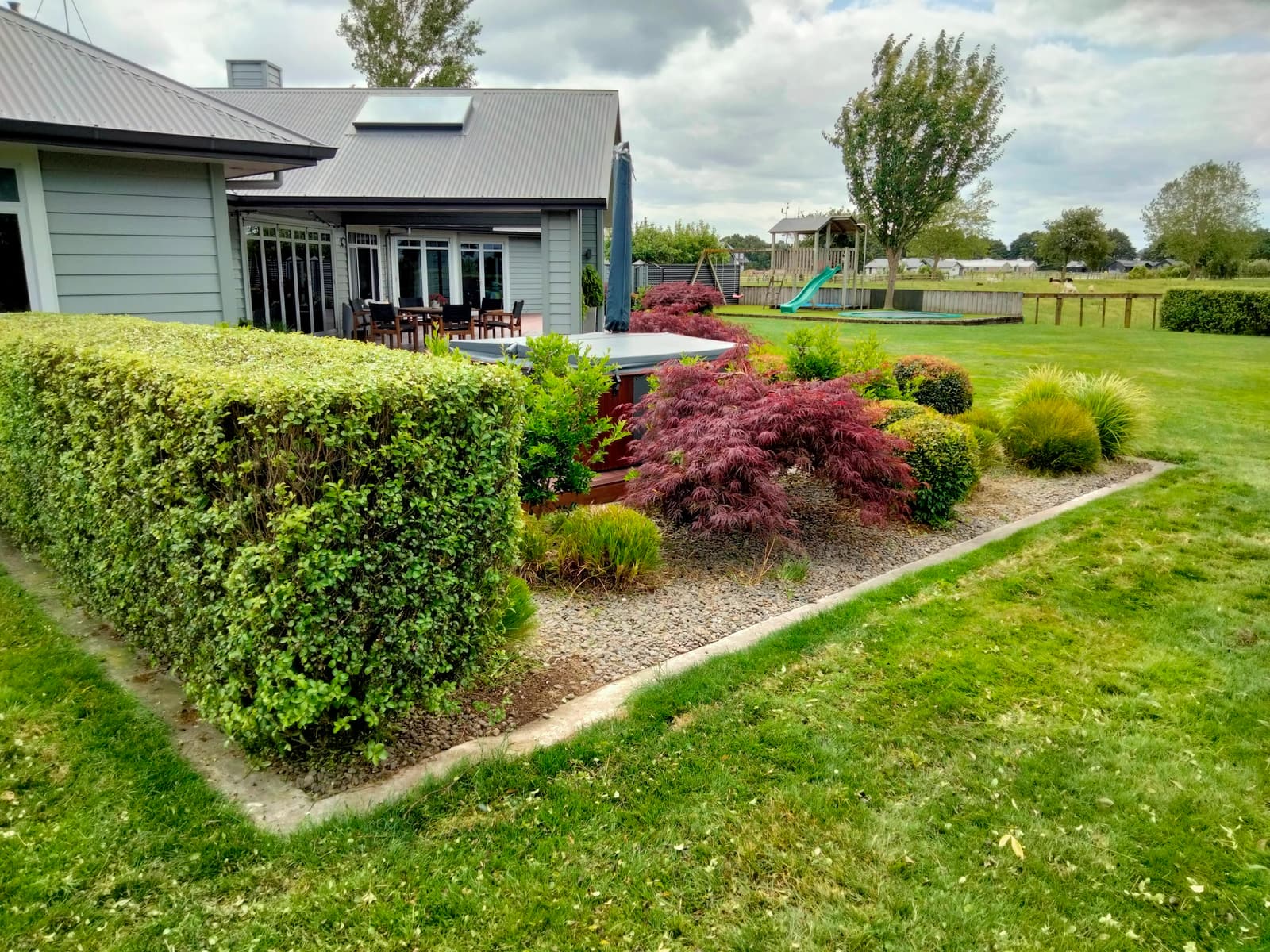
For formal gardens, keep the palette restrained and use plants with clean form. For rural and lifestyle properties, a softer wetland-style planting can connect naturally with existing shelterbelts, dams and open paddock views. The right approach depends on the property’s architecture, scale and the amount of ongoing care planned.
Plant properly to give roots the right conditions
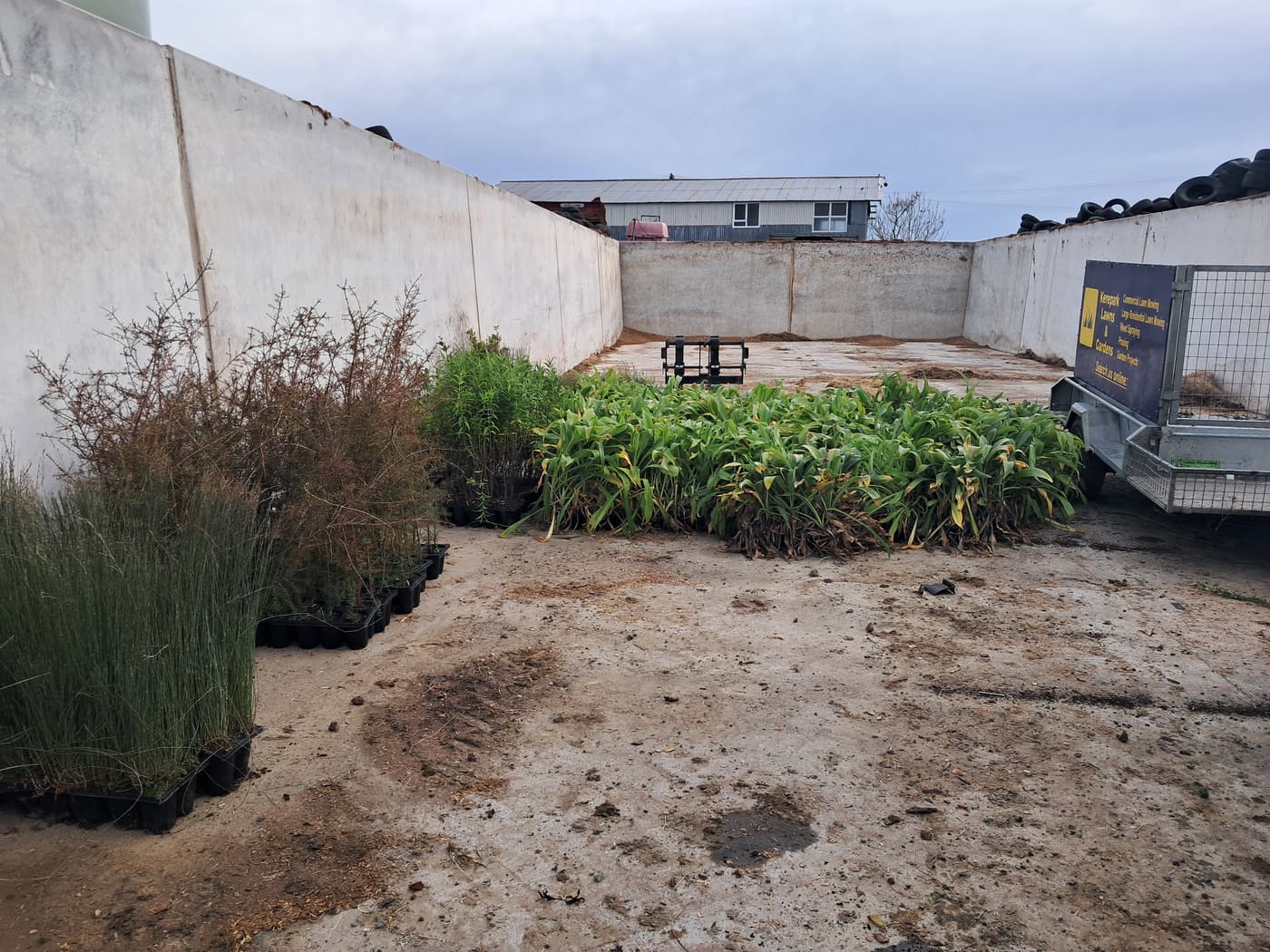
Wet-tolerant plants still need careful installation. Avoid digging when heavy clay is saturated, as working it in that state can smear the sides of planting holes and make drainage worse. Plant when the soil is moist but workable, then prepare a broad hole rather than a deep narrow one.
Set the plant at the same depth it sat in its pot. Burying the crown too deeply is a common cause of poor establishment, even in moisture-loving species. Firm the soil gently around the roots, water in thoroughly and apply mulch across the bed while keeping it clear of stems and crowns.
Organic mulch helps moderate soil temperature, suppress weeds and protect the soil surface from heavy rain. In waterlogged locations, use it sparingly and avoid creating a thick, wet layer that may trap moisture around plant bases. Plant spacing matters too. Dense planting can look full quickly, but crowded plants are harder to weed, divide and maintain over time.
Care through the seasons
The first year determines whether wet-area planting becomes established or turns patchy. Keep weeds under control before they gain a foothold, particularly around young sedges and flax. Check that mulch has not washed into drains or pond edges after heavy rain, and remove damaged foliage to keep the area tidy.
In autumn and winter, inspect water flow. If plants are sitting beneath a new build-up of silt, leaf litter or lawn clippings, clear it before it smothers crowns. In spring, divide vigorous clumping plants where needed and replace any plants that have struggled in their exact position. This is normal refinement, not a sign that the entire scheme has failed.
For larger or complex properties, Kerepark Lawns & Gardens can assess the site conditions, develop a planting plan that suits the wider landscape and maintain it as the garden matures. That continuity helps ensure drainage works, plant selection and long-term care all support the same outcome.
A wet corner can become one of the most distinctive parts of a property when it is treated as an opportunity rather than an inconvenience. Choose plants for the moisture, light and scale of the site, give them a well-defined home, and allow the planting to do the practical work of making water feel like it belongs.