A fruit tree can look perfectly healthy yet produce a disappointing crop if it is cut back at the wrong time. Knowing when to prune fruit trees is less about following one calendar date and more about matching the work to the variety, its growth cycle and the conditions on your property. Done well, pruning improves light, air movement, fruit quality and the long-term shape of the tree. Done poorly, it can remove fruiting wood, encourage weak regrowth or leave a tree vulnerable to disease.
For Waikato gardens, orchards and lifestyle properties, winter is the main pruning season for many deciduous fruit trees. However, stone fruit, citrus and evergreen varieties need a different approach. The best result comes from treating each tree as part of the wider garden, with pruning timed to protect both its health and its harvest.
When to Prune Fruit Trees: Start With the Variety
Fruit trees do not all respond in the same way. Apples and pears are generally pruned while dormant in winter, whereas plums, peaches, nectarines and cherries are better pruned in warmer, drier weather after harvest. Citrus requires only selective trimming, usually once the risk of hard frost has passed.
This distinction matters because each group carries different disease risks and produces fruit on different types of wood. A strong winter prune can be valuable for an overgrown apple tree, but applying the same treatment to a peach can create avoidable problems.
Apples and pears: prune in winter
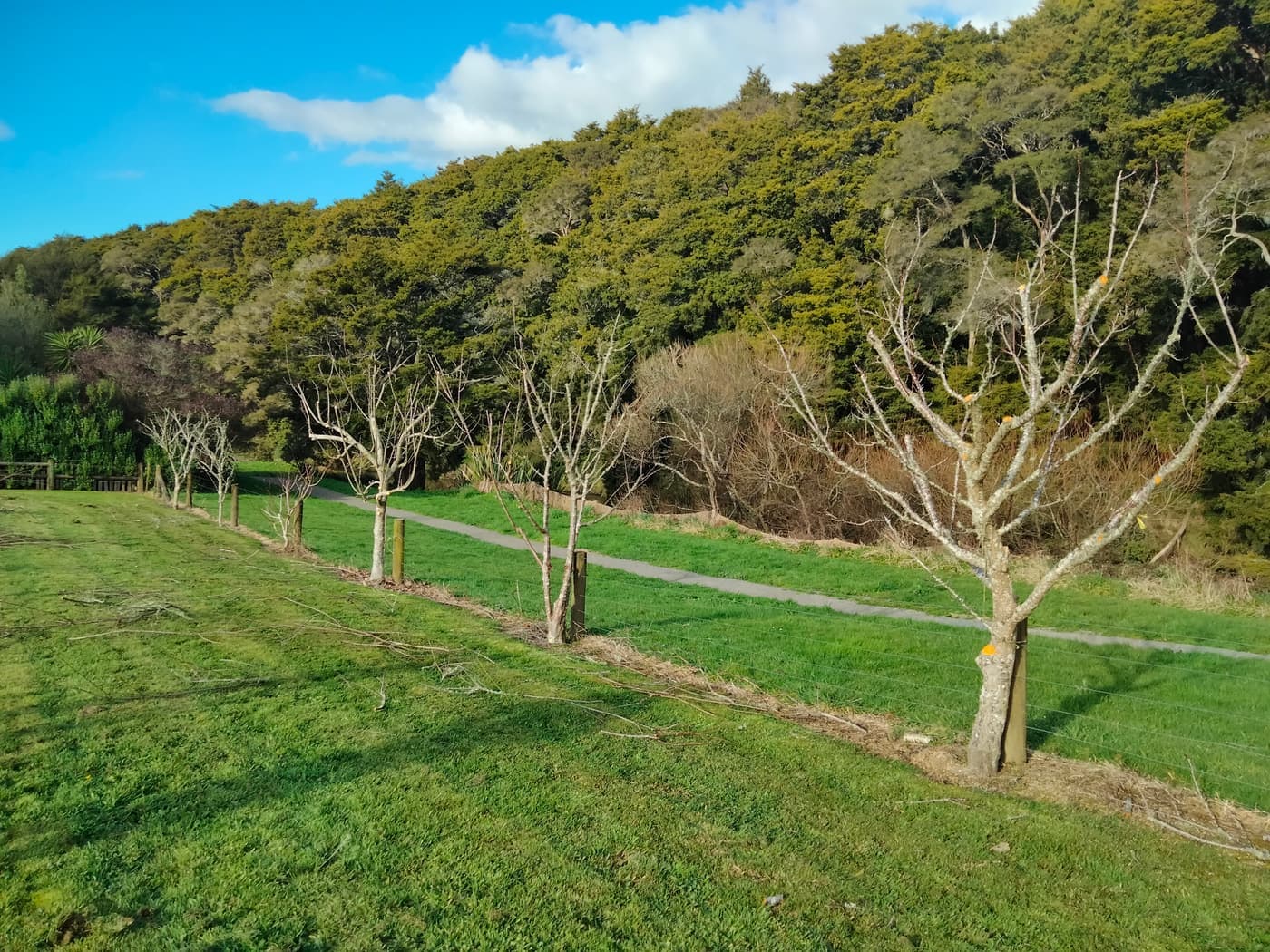
Apple and pear trees are usually pruned from late June through August, while they are dormant and before buds break in spring. With the leaves down, the branch structure is easy to see. This makes winter the right time to remove crossing branches, crowded growth, dead wood and upright water shoots.
Aim to create an open, balanced framework that allows sunlight into the centre of the canopy. Good light exposure helps fruit ripen evenly and makes future maintenance more manageable. On established trees, preserve productive fruiting spurs rather than simply shortening every branch.
Avoid pruning during very wet periods or when a sharp frost is forecast. Clean cuts made with sharp, sanitised tools heal better, and dry conditions reduce the chance of disease entering fresh wounds.
Stone fruit: prune after harvest or in dry summer weather
Peaches, nectarines, apricots, plums and cherries are best pruned after fruiting, generally from late summer into early autumn. In the Waikato, dry weather is particularly valuable when working on stone fruit. These trees can be susceptible to fungal and bacterial infections, including silver leaf, which are more likely to enter through pruning wounds in cool, wet conditions.
Summer pruning also lets you see how heavily the tree has fruited and identify branches that are shaded, weak or too congested. Remove spent fruiting wood where appropriate, thin crowded shoots and keep the canopy low enough for safe harvesting.
Peaches and nectarines fruit mainly on one-year-old wood, so they benefit from more regular renewal pruning than apples or pears. Leaving a supply of strong new shoots is essential for next season’s crop. Cherries and plums often need a lighter hand, particularly when young.
Citrus, feijoas and evergreen fruit trees: prune lightly
Citrus should not receive a heavy winter prune. Remove dead, damaged or rubbing branches in late winter or early spring, after the main frost risk has eased, then lightly shape the tree as needed. Excessive cutting can expose limbs and fruit to sunburn while prompting soft, frost-sensitive new growth.
Feijoas are commonly pruned after harvest or in late winter. Their dense habit can quickly restrict light and airflow, so thinning selected internal branches is usually more effective than shearing the outside into a tight ball. A well-managed feijoa should be open enough for light to reach fruiting wood but still retain a natural, sheltered shape.
Avocados, olives and similar evergreen trees are best handled conservatively. Remove damaged limbs and branches that create access or safety issues, then make modest structural adjustments after harvest or during active, settled growing conditions. Their response depends on age, vigour and exposure, so broad rules are less reliable than an assessment of the individual tree.
The Right Time Also Depends on the Job
Pruning has different purposes, and the timing should reflect that. A young tree needs formative pruning to establish a strong framework. An older neglected tree may need renovation over several seasons. A mature, productive tree often needs only measured annual maintenance.
For young fruit trees, winter is useful for selecting well-spaced scaffold branches and correcting poor angles before they become structural problems. The goal is not to make the tree small by force. It is to guide a shape that can carry fruit, allow easy access and remain balanced as it matures.
For established trees, remove dead, diseased and damaged wood whenever you see it, provided conditions are dry and suitable for clean cuts. You do not need to wait for winter to deal with a broken branch or a clear disease concern. Larger corrective work, though, should be timed carefully according to the species.
An overgrown apple or pear tree should rarely be reduced all at once. Removing too much canopy can trigger a flush of vigorous upright shoots and set fruit production back. A staged renovation, carried out over two or three winters, is usually safer and produces a better-looking, more productive tree in the long run.
How Much Should Be Removed?
A common mistake is assuming that a harder prune will automatically produce more fruit. In reality, severe pruning often produces more leafy growth, not better crops. As a general rule, avoid removing more than around one-quarter of a healthy mature canopy in a single season unless there is a specific safety or restoration reason.
Start with the branches that give the clearest benefit: dead wood, diseased growth, branches that cross and rub, low limbs that obstruct mowing or access, and dense upright shoots that shade the centre. Then stand back and reassess before making additional cuts.
Every cut should have a purpose. Shortening a branch may encourage growth below the cut, while removing it back to a side branch or its point of origin redirects the tree’s energy differently. This is why thoughtful pruning produces cleaner, more durable results than indiscriminate trimming.
Signs Your Fruit Tree Is Due for Attention
A tree may need professional pruning if fruit is small or confined to the outer canopy, branches are crowding each other, the centre is dense and dark, or harvesting has become difficult. Suckers from the base, repeated water shoots and limbs hanging over driveways, sheds or footpaths are also signs the tree needs more than a quick tidy-up.
Disease symptoms deserve prompt attention. Look for dead twigs, discoloured leaves, unusual ooze, cankers or branches that fail to leaf out in spring. Pruning can help remove affected material, but correct identification matters. Cutting at the wrong point, or moving between trees with unclean tools, can spread the problem.
Practical Preparation Before Pruning
Good pruning begins before the first cut. Use sharp secateurs, loppers and pruning saws suited to the branch size. Blunt tools crush wood and leave ragged wounds. Disinfect tools between trees, especially where disease is suspected, and clear fallen fruit and prunings from beneath the canopy.
Do not rely on pruning alone to solve every fruiting problem. Poor pollination, late frosts, pest pressure, nutrient imbalance, drought and excessive shade can all limit a crop. A tree with plenty of flowers but little fruit may need a broader garden-care plan rather than a heavier prune.
For large trees, trees near buildings or power lines, and older orchards that have missed years of maintenance, professional management is the sensible option. Safe access, species knowledge and a considered multi-season plan protect the tree as well as the people and property around it.
Kerepark Lawns & Gardens provides considered fruit-tree pruning as part of practical, ongoing garden care across the Waikato. The focus is not simply on making trees look neat for the day, but on maintaining healthy structure, manageable growth and productive gardens over time.
A well-timed prune gives a fruit tree room to perform at its best. Schedule the work around the tree in front of you, choose dry conditions, and favour careful, purposeful cuts over a rushed annual chop.