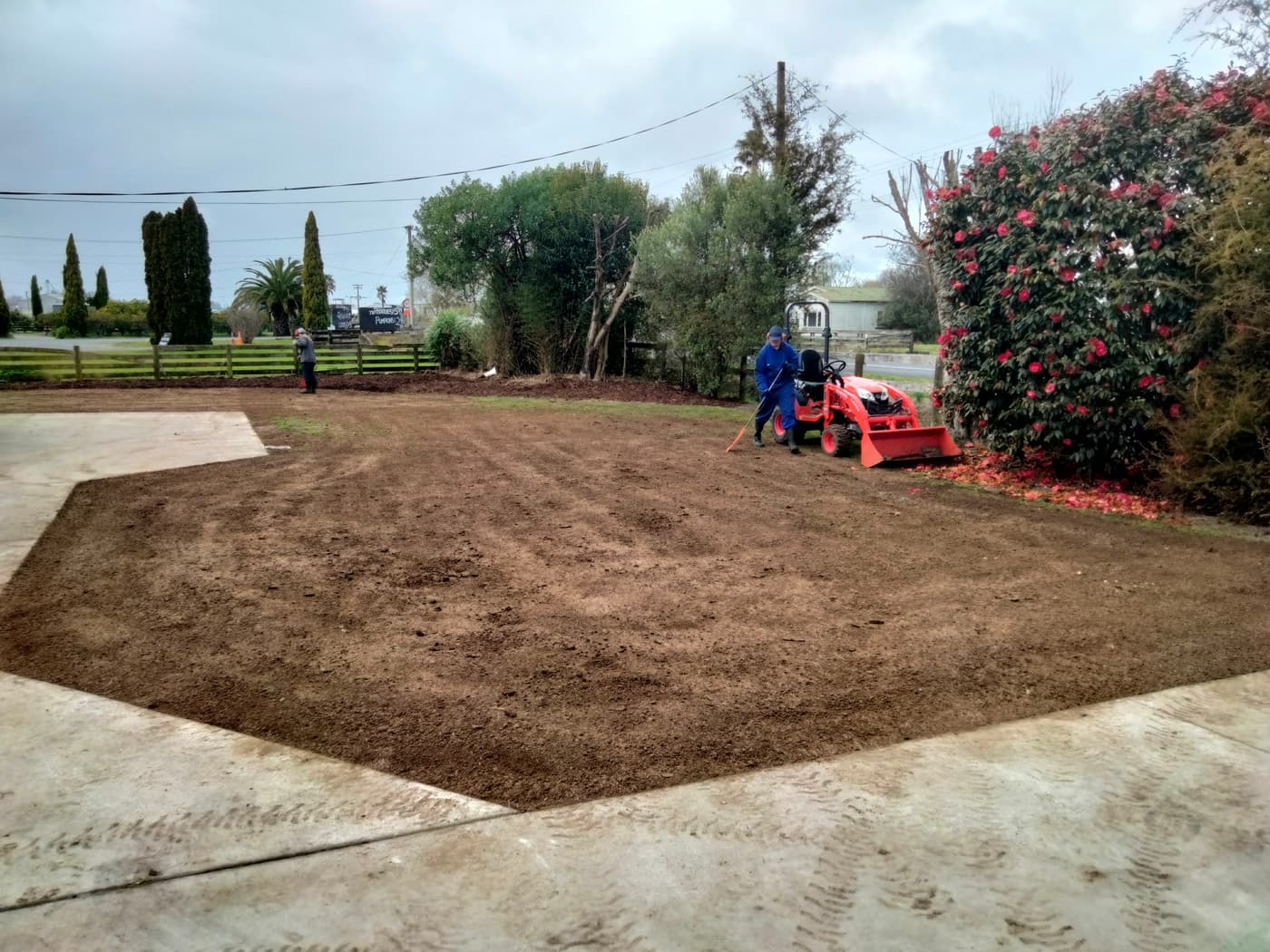
A lawn that holds water after a Waikato downpour is more than an inconvenience when it is time to mow. Persistent puddles can turn turf thin and muddy, restrict access around the property, damage plant roots and leave parts of an otherwise well-kept garden looking neglected. Understanding what causes lawn puddling is the first step towards a repair that lasts, rather than a short-term fix that simply moves water elsewhere.
The right solution depends on where the water is coming from, how quickly it should drain, the soil beneath the lawn and the wider layout of the property. A level lawn is not always a well-drained lawn, and adding soil is not always the answer.
What causes lawn puddling in Waikato properties?
Lawn puddling occurs when rainwater cannot soak into the ground or travel away across the surface quickly enough. In the Waikato, heavier rainfall, clay-based soils and flat sections around homes, sheds and commercial buildings can make the problem especially common.
Sometimes the issue is confined to one compacted gateway or a low patch beneath a downpipe. In other cases, the entire lawn remains soft for days after rain. The latter usually points to a broader drainage, soil or grading issue that needs to be considered as part of the whole landscape.
Compacted soil stops water entering the ground
Compaction is one of the most frequent causes of waterlogged lawns. Soil particles are pressed tightly together by foot traffic, vehicles, machinery, repeated mowing on wet ground or years of natural settling. This leaves little pore space for air and water.
Compacted ground often feels hard in dry weather but becomes slippery and saturated after rain. Water sits on the surface because it cannot move through the soil profile. High-use areas near driveways, clotheslines, gates, play spaces and outdoor entertaining areas are particularly vulnerable.
Aeration can help where compaction is relatively mild. However, it is not a cure-all. If the lawn is built over heavily compacted subsoil, has poor-quality fill beneath it or receives regular vehicle traffic, more substantial soil preparation and drainage work may be required.
Clay soil drains slowly
Many local properties have soils with a high clay content. Clay holds nutrients well, which can be valuable for planting, but its tiny particles drain slowly and readily compact. After sustained rain, the ground may simply be unable to accept water as fast as it arrives.
A sandy topdressing can improve the surface over time when it is applied appropriately and worked into an aerated lawn. Spreading a layer of sand over dense clay without addressing the layer beneath can create a perched-water effect, where moisture sits at the boundary between two very different soil types. The result may be a lawn that still puddles, despite the expense and effort.
For this reason, soil improvement should be matched to the existing soil and the intended use of the area. A fine ornamental lawn, a rural access strip and a commercial frontage do not all need the same treatment.
Low spots and poor lawn grading collect runoff
Water follows gravity. Even a shallow hollow in a lawn can collect a surprising volume of runoff from roofs, paved areas, driveways and neighbouring slopes. These low points are often created gradually as soil settles, tree roots change the ground level, old trenches sink or turf is laid over uneven preparation.
Poor grading can also direct surface water back towards buildings, paths or outdoor living areas. This is where puddling becomes more than a lawn-care issue. Water near foundations, retaining walls and hard surfaces should be assessed carefully, with drainage designed to direct it safely to an appropriate outlet.
Regrading may involve removing turf, reshaping the sub-base, improving the soil profile and relaying or reinstating the lawn. It is more disruptive than a simple topdress, but it provides a durable result when the site levels are the real problem.
Thatch and weak turf reduce infiltration
Thatch is the layer of dead stems, roots and organic material that accumulates between grass blades and the soil. A small amount is normal. A thick, dense layer can repel water initially, stopping it from reaching the soil below.
This can be misleading because a lawn may look dry on top while the ground underneath is already wet. Rain then runs across the surface and settles in the lowest area. Excessive thatch is often linked with shallow watering, over-fertilising, poor soil biology or mowing practices that stress the grass.
Scarifying, aerating and improving mowing and feeding practices can restore better water movement. Timing matters, though. Renovation work should be planned for conditions that allow the grass to recover, rather than carried out when the lawn is already under pressure from wet weather.
Downpipes, driveways and hard surfaces concentrate water
Not all puddles are caused by the lawn itself. Roof runoff released at the base of a downpipe can overwhelm a small area quickly. A driveway, patio or compacted path may shed water straight onto turf, while a neighbouring bank can funnel runoff towards the house.
Before treating the puddle, look at what happens during rain. Does water appear immediately beneath a downpipe? Does it flow off a concrete edge? Does a slope direct water into the same corner of the lawn? Identifying the source helps avoid spending money on turf repairs while the incoming water remains unmanaged.
In some situations, the practical solution is to capture and redirect runoff through appropriate drainage. In others, a shallow swale or carefully graded planted area can slow and disperse water more naturally. The best approach needs to suit the site, soil, access and local drainage requirements.
How to identify the real drainage problem
A quick inspection after rain can reveal a great deal. Note how long the puddle remains, whether the water is clear or muddy, and whether it forms in the exact same place each time. If it disappears within a few hours after a major storm, the lawn may be functioning adequately. If it remains for several days, the grass roots are likely spending too long without oxygen.
Push a screwdriver or soil probe into the affected area and compare it with a healthy part of the lawn. Resistance close to the surface suggests compaction. If the probe moves easily through the topsoil then hits a hard layer, there may be compacted subsoil or construction fill beneath.
It is also useful to inspect the surrounding levels. Look for sunken turf, settled trenches, blocked drains, overflowing gutters and soil built up against paths or edging. On larger lifestyle and commercial properties, drainage issues can travel well beyond the visible puddle, particularly where runoff moves downhill from yards, paddocks or buildings.
Lasting solutions for a puddling lawn
There is no single product that fixes every wet lawn. The remedy should address the cause and respect the way the property is used.
For a compacted but otherwise well-graded lawn, core aeration followed by suitable topdressing and ongoing turf care may be enough. For a shallow depression, lifting turf or adding compatible soil and re-establishing levels can resolve the collection point. Where roof or hard-surface runoff is the trigger, drainage or redirection should come before lawn restoration.
More complex sites may need a coordinated approach that combines excavation, subsoil preparation, drainage lines, new lawn levels and planting. This is particularly worthwhile around new builds, rural homes, driveways, commercial grounds and outdoor areas where a muddy lawn affects access, presentation or day-to-day maintenance.
Be cautious with quick fixes such as repeatedly adding topsoil to a puddle. This can raise the area above adjoining edges, bury turf crowns, create awkward mowing lines and send water towards another problem area. Similarly, installing drains without confirming levels and a lawful discharge point can leave a system that has nowhere useful to drain.
Protecting the lawn after repairs
Once drainage and levels are corrected, a few consistent practices help protect the investment. Avoid mowing when the ground is saturated, as tyres and foot traffic can quickly recompact the surface. Keep mowing heights appropriate for the grass type and season, and do not remove too much leaf in one pass.
Water deeply but less often during dry periods to encourage stronger roots, rather than relying on frequent shallow watering. Keep gutters, downpipes and surface drains clear, especially before wetter months. If an area receives unavoidable traffic, consider whether a path, reinforced turf system or a different surface would perform better than asking lawn to carry that load.
A well-drained lawn should feel firm underfoot, recover well from rain and provide a clean, usable setting for the rest of the garden. Where puddling keeps returning, treat it as a property-wide water-management question, not just a patch of wet grass. A careful assessment of soil, levels and runoff can turn an unreliable area into grounds that look good and work properly through every season.