A mature apple tree can look full of promise in late winter, yet still deliver small fruit, tangled branches and a difficult harvest. In Waikato gardens and lifestyle blocks, fruit tree pruning Waikato property owners arrange at the right time can make the difference between a tree that merely survives and one that remains healthy, manageable and productive for years.
Pruning is not simply a matter of making a tree look tidy. Every cut affects how light reaches the canopy, where the tree directs its energy, how air moves through the branches and how easily fruit can be picked. Done with care, it protects the tree’s structure while supporting better-quality crops. Done too heavily, too late or without regard for the variety, it can encourage excessive leafy growth or leave the tree vulnerable to disease.
What professional pruning changes
Fruit trees are living structures, not static garden features. Left unpruned, many develop crowded centres, long unproductive limbs, weak branch junctions and fruiting wood that sits too high to reach safely. The result is often a tree that shades itself, carries inconsistent fruit and becomes harder to maintain each season.
A considered pruning programme removes dead, damaged and crossing branches first. From there, the aim is to create a balanced framework that allows sunlight and airflow into the canopy. This helps fruit ripen more evenly and reduces the damp, congested conditions that can contribute to fungal problems.
Good pruning also keeps a tree at a practical height. For a home orchard, that means less reliance on ladders and more fruit within reach. On larger rural or lifestyle properties, it makes regular care, harvesting and mowing around the trees safer and more efficient.
The best result is rarely the most severe cut. Productive trees need enough leaf area to build energy, as well as enough open space to carry fruit well. The right approach depends on the tree’s age, vigour, variety, site conditions and whether the priority is fruit production, restoration or simply a healthier shape.
Fruit tree pruning in Waikato: choosing the right season
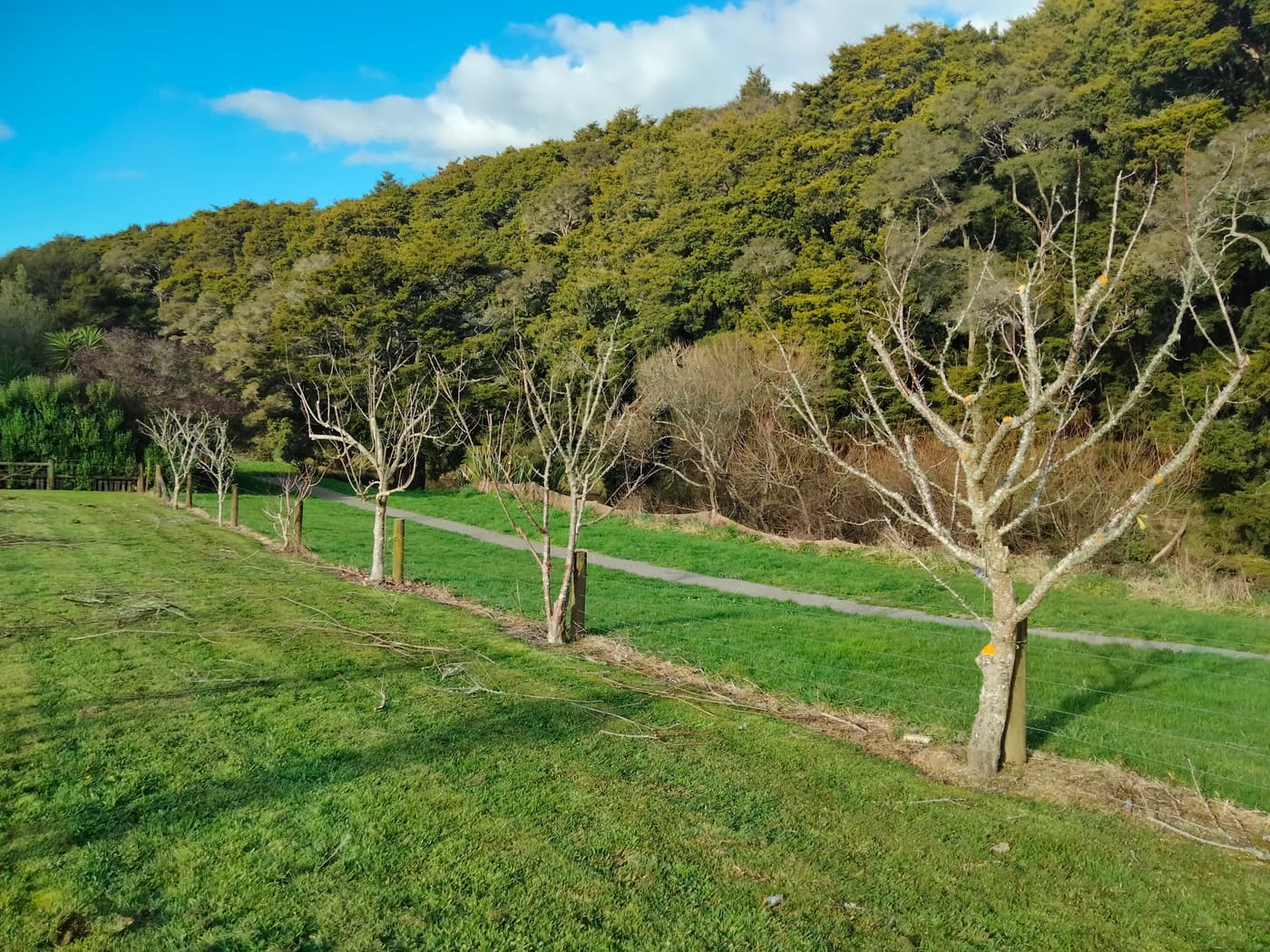
Timing matters because Waikato’s cool, wet winters and warm growing seasons influence how trees respond. Deciduous fruit trees such as apples, pears, plums, peaches and nectarines are generally assessed and pruned during dormancy, commonly from late winter through to just before spring growth begins. With leaves absent, the branch structure is easier to see and the work can be planned more accurately.
However, not every fruit tree follows the same calendar. Stone fruit may benefit from summer pruning in certain situations, particularly where disease management or strong upright growth is a concern. Citrus are usually pruned more lightly after the risk of frost has eased, while feijoas may need selective thinning after harvest to retain light and control their size.
A hard winter prune can trigger vigorous regrowth in a strong apple or pear tree. That may be useful when rebuilding an old framework, but it is not always desirable where the goal is steady fruiting and a compact canopy. Summer pruning can moderate that response, though removing too much green growth can reduce the tree’s capacity to feed itself. This is why a one-size-fits-all pruning date rarely delivers the best outcome.
Weather also shapes the work. Pruning during persistently wet conditions is best avoided where possible, especially on susceptible trees, because fresh cuts can provide an entry point for disease. A knowledgeable team will work with the season, the tree and the forecast rather than treating pruning as a fixed annual task.
Different fruit trees need different cuts
Apples and pears usually fruit on spurs or particular wood types depending on the cultivar. Their pruning often focuses on maintaining a clear branch structure, renewing ageing fruiting wood and removing vigorous upright watershoots without stripping out productive spurs.
Peaches, nectarines and some plums fruit on one-year-old wood, so they require a more active renewal approach. If last season’s growth is removed indiscriminately, much of the next crop may be taken with it. These trees also need an open canopy that dries quickly after rain and allows sunlight to reach developing fruit.
Citrus are different again. They generally need only light shaping, removal of dead or rubbing branches and management of shoots below the graft. Over-pruning citrus can expose limbs and fruit to sun damage, particularly on more open sites. Feijoas can become dense and tall if neglected, but aggressive cutting can replace that problem with a flush of upright regrowth. Selective thinning is often the more useful long-term answer.
Newly planted trees need formative pruning rather than production pruning. The first few years establish the trunk, main limbs and future height of the tree. Mature trees need a different touch, while older neglected specimens may need staged restoration over two or three seasons. Attempting to correct decades of growth in one visit can place unnecessary stress on the tree.
A careful process protects the property
Quality pruning begins with an inspection from the ground. Before a branch is removed, it is worth identifying the tree type, likely fruiting habit, areas of decay, branch weight, access requirements and what sits below the canopy. Nearby garden beds, lawns, sheds, fences, footpaths and vehicles all affect how the job should be carried out.
The pruning work should then follow a clear order. Unsafe, dead and damaged material is addressed first, followed by branches that cross, rub or grow back into the centre of the tree. Structural cuts are made with the tree’s natural form in mind, then fruiting wood is refined to balance crop potential with healthy growth.
Clean, correctly placed cuts matter. Cuts made flush against the trunk can damage the branch collar, while long stubs can die back and create entry points for decay. Sharp, maintained equipment helps produce clean cuts, and tools should be kept hygienic when moving between trees, particularly where disease is suspected.
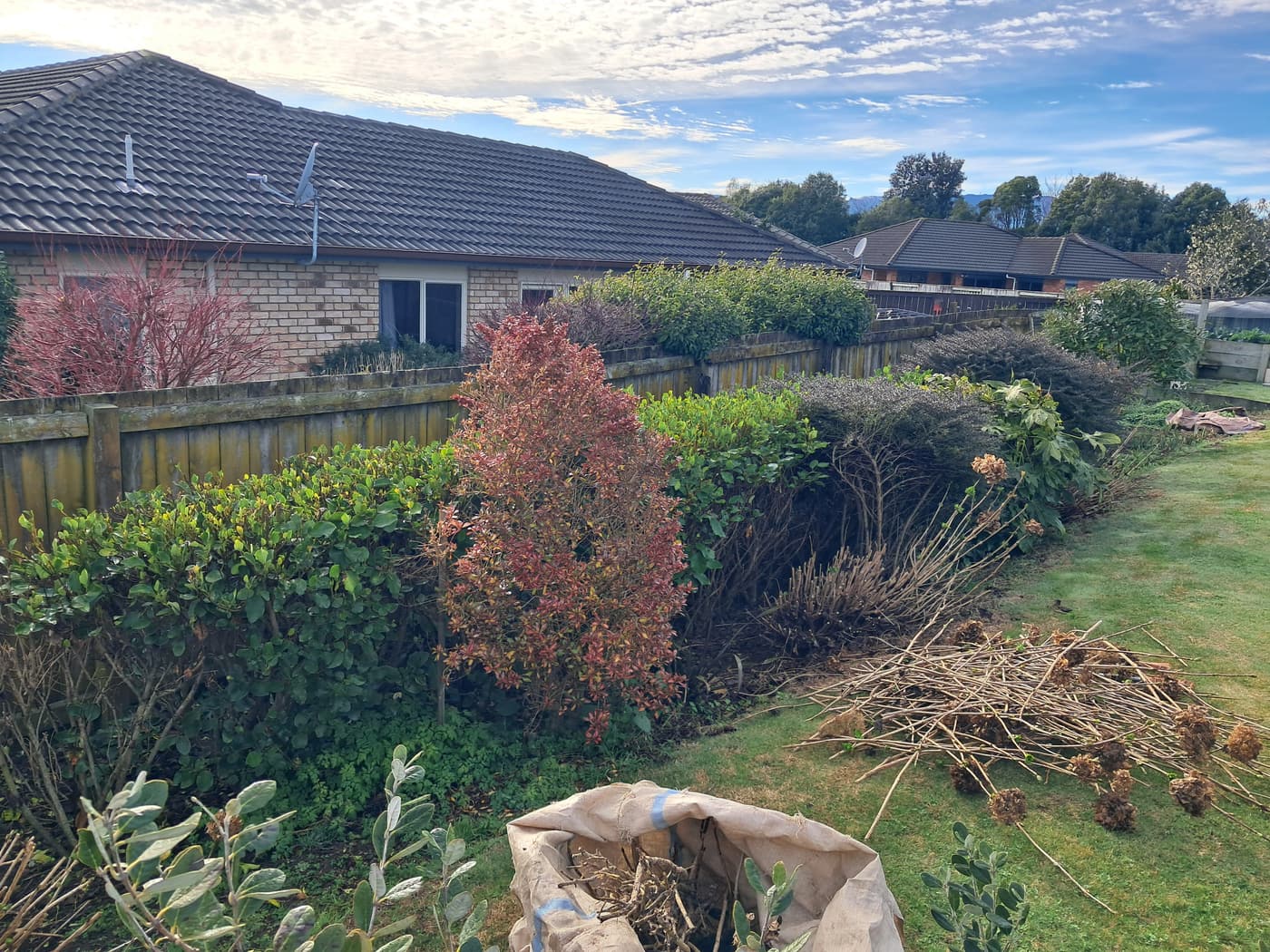
The job is not finished when the last cut is made. Green waste needs to be removed or managed appropriately, and the area beneath the tree should be left tidy. On well-kept residential gardens and commercial grounds, this attention to the site is part of the service, not an optional extra.
When it makes sense to call in a professional
Smaller, young trees can often be maintained by confident property owners with the right tools and a basic understanding of fruiting habits. The risk rises quickly with mature canopies, heavy limbs, uneven ground and trees that have been left unattended for years.
Professional help is particularly valuable where trees have become too tall, branches sit over buildings or accessways, the variety is unknown, or several trees need coordinated seasonal care. Trees near power lines require a suitably qualified specialist and should never be tackled as a routine garden job.
For busy homeowners, retirement properties and larger lifestyle blocks, outsourcing pruning also removes the need to manage ladders, chainsaws, green-waste loads and repeated corrective work. Kerepark Lawns & Gardens can incorporate fruit tree care into an ongoing garden-maintenance plan, so pruning is completed as part of a well-managed outdoor environment rather than only when a tree becomes unmanageable.
Keep the gains through the growing season
Pruning works best alongside sensible year-round care. A tree that is stressed by compacted soil, prolonged dry conditions, poor drainage or competition from grass may not respond as expected. Mulch, thoughtful watering, appropriate feeding and weed control around the root zone all support the recovery and fruiting potential of the tree.
It is also wise to inspect trees after strong winds and heavy rain. Early attention to broken limbs, disease symptoms or vigorous shoots prevents small issues becoming larger structural problems. For orchard areas, scheduling care across the property can keep lawns, hedges, garden beds and trees looking considered through every season.
A well-pruned fruit tree should still look like a fruit tree, not a collection of bare poles. With the right timing and a patient, tree-specific approach, it can become a productive part of the property that is safer to maintain, easier to harvest and a pleasure to see each season.